Sustainable Engineering

Application of Environmentlly-friendly Techniques
Green Technologies
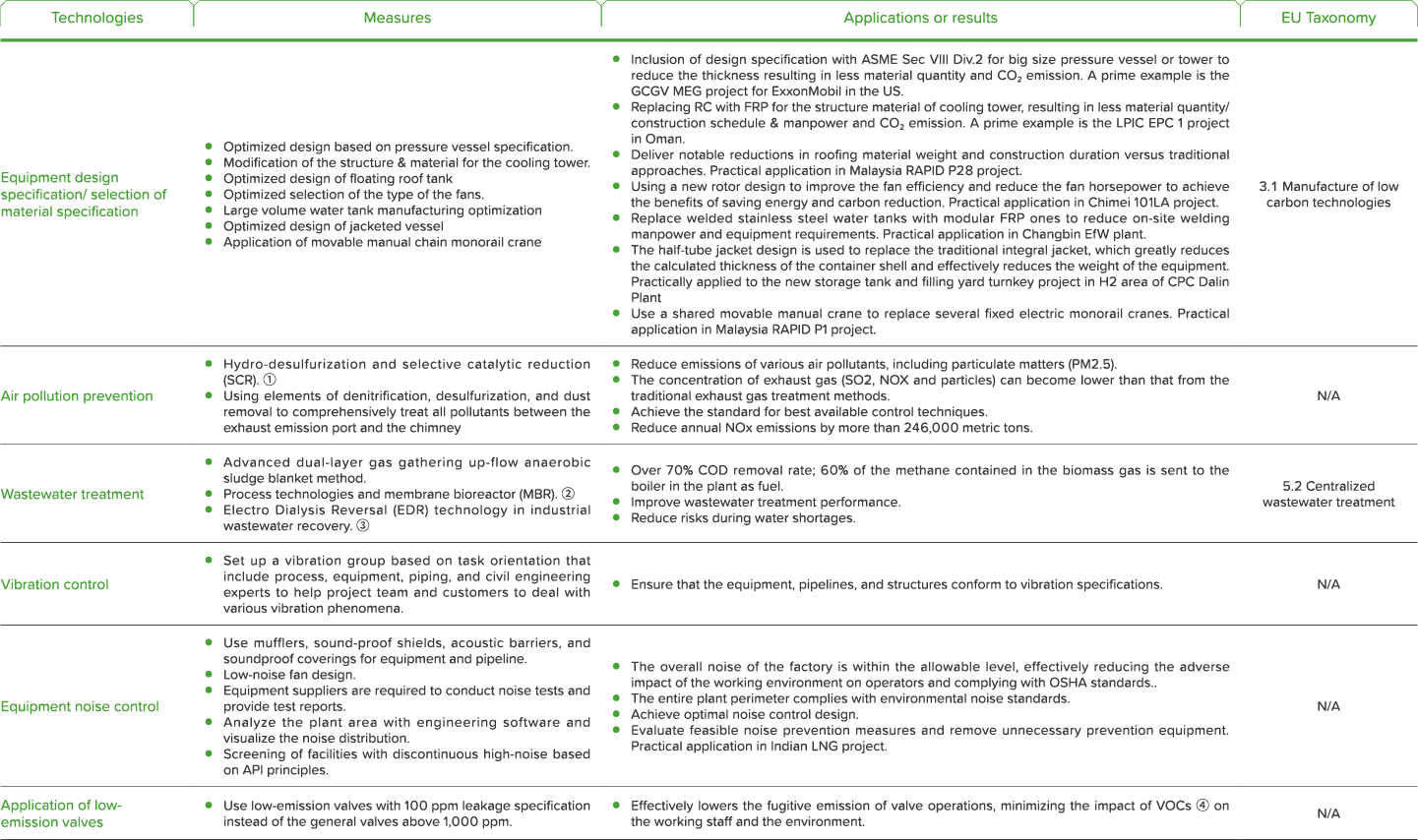
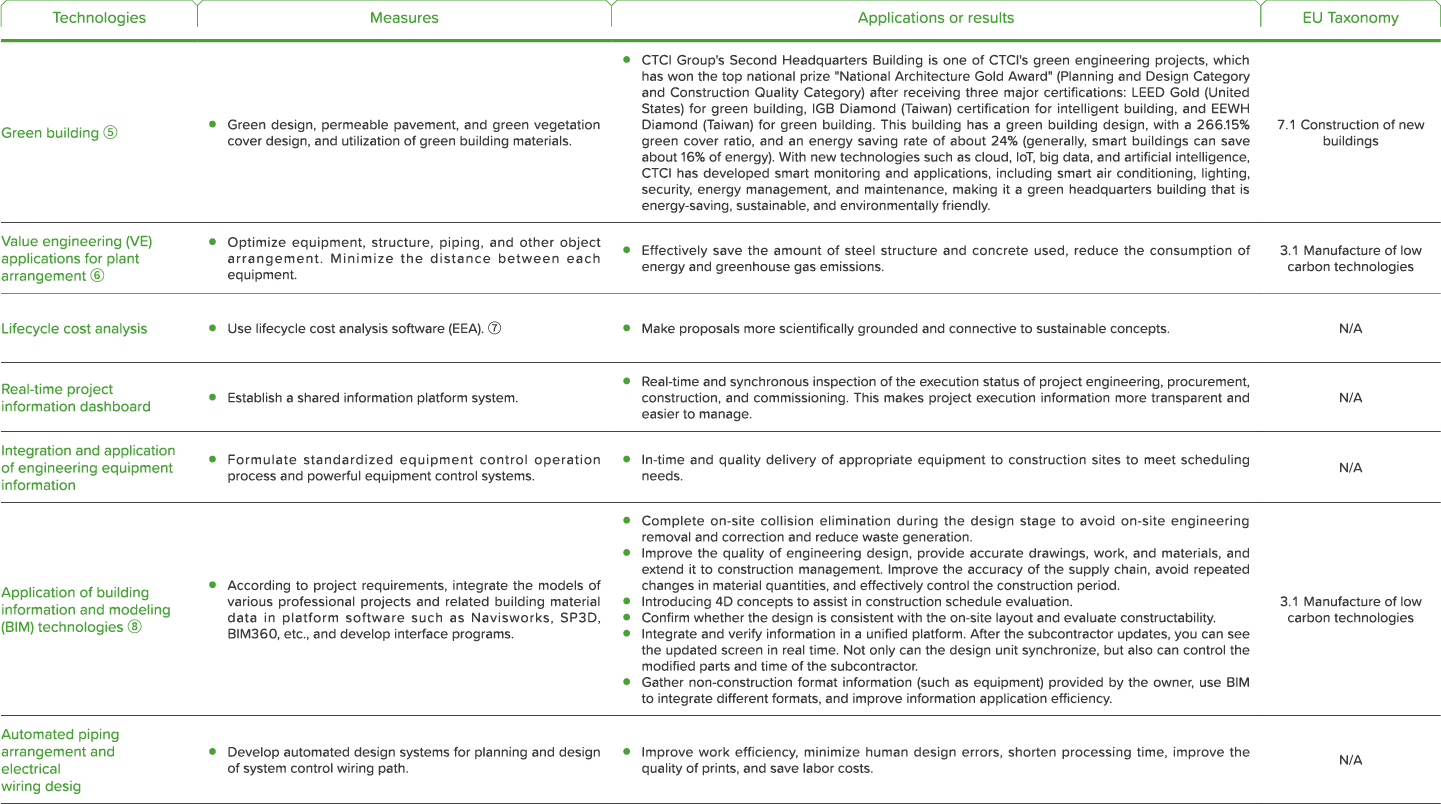
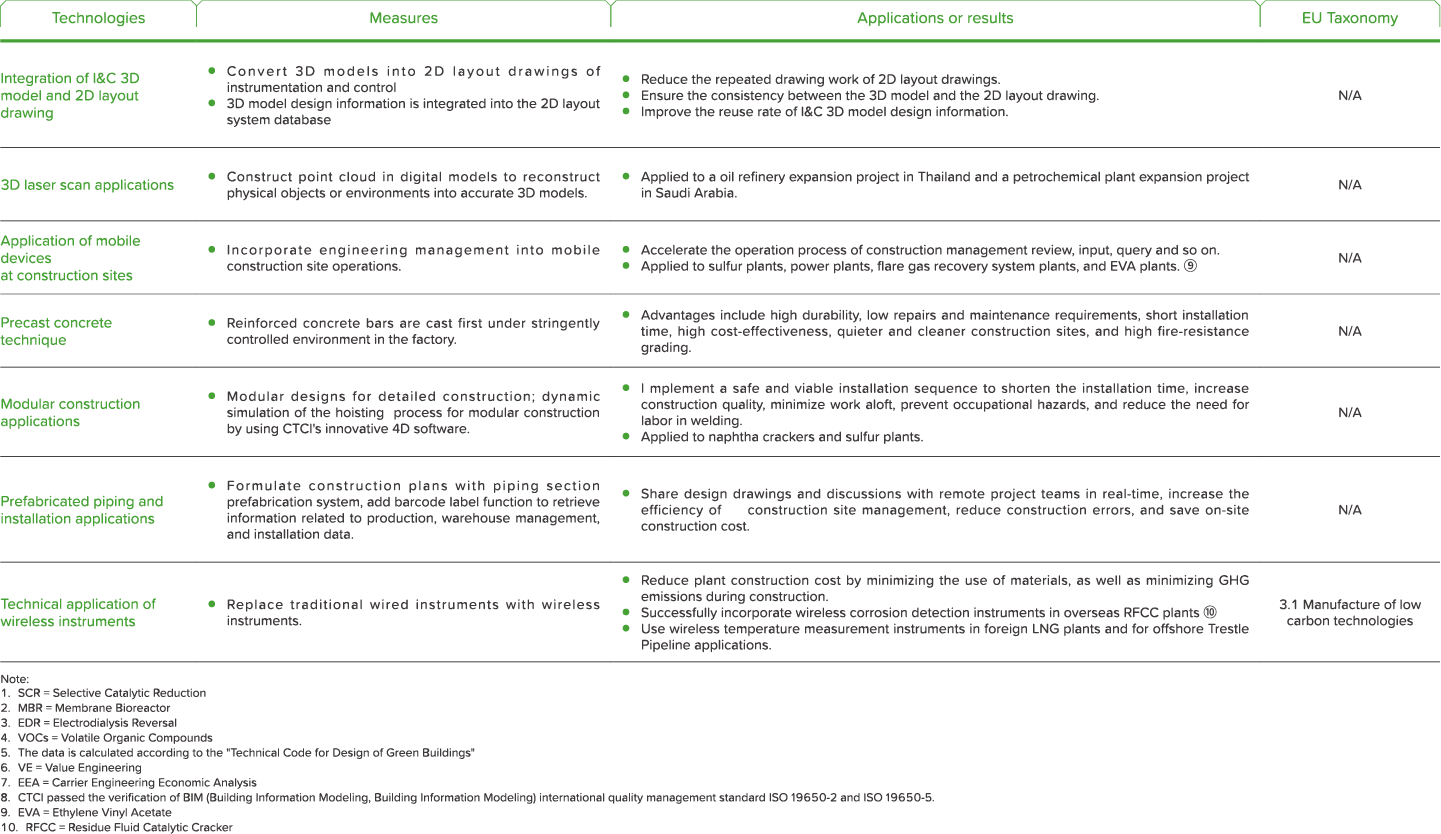
CTCI works closely with its clients to adopt advanced environmentally friendly and energy-efficient technologies in project processes. Guided by green building concepts, the central control centers withinproject sites are designed to minimize the impact of operations on land, air, water, and natural ecosystems. As a global leader in green engineering technologies, CTCI incorporates the United NationsSustainable Development Goals into the development of green technologies to strengthen its long-term competitiveness. Leveraging its professional expertise and extensive experience, CTCI continuously introduces and develops innovative technologies, working hand in hand with clients to create a more sustainable future.

CTCI's leading technologies in the process, supply chains, construction, and plant commissioning allow it to play an important role in the global EPC market. From the full lifecycle perspective of engineering design, procurement, construction, commissioning, operation, and decommissioning, CTCI is committed to reducing the risk of environmental impact, providing customers with various green technological services that meet environmental protection requirements. It also continues to enhance its environmental  protection capabilities and implement an environmental management system. The Company strives for economical and feasible environmental protection and energy-conservation solutions and seize innovative opportunities when developing engineering projects that utilize these techniques.
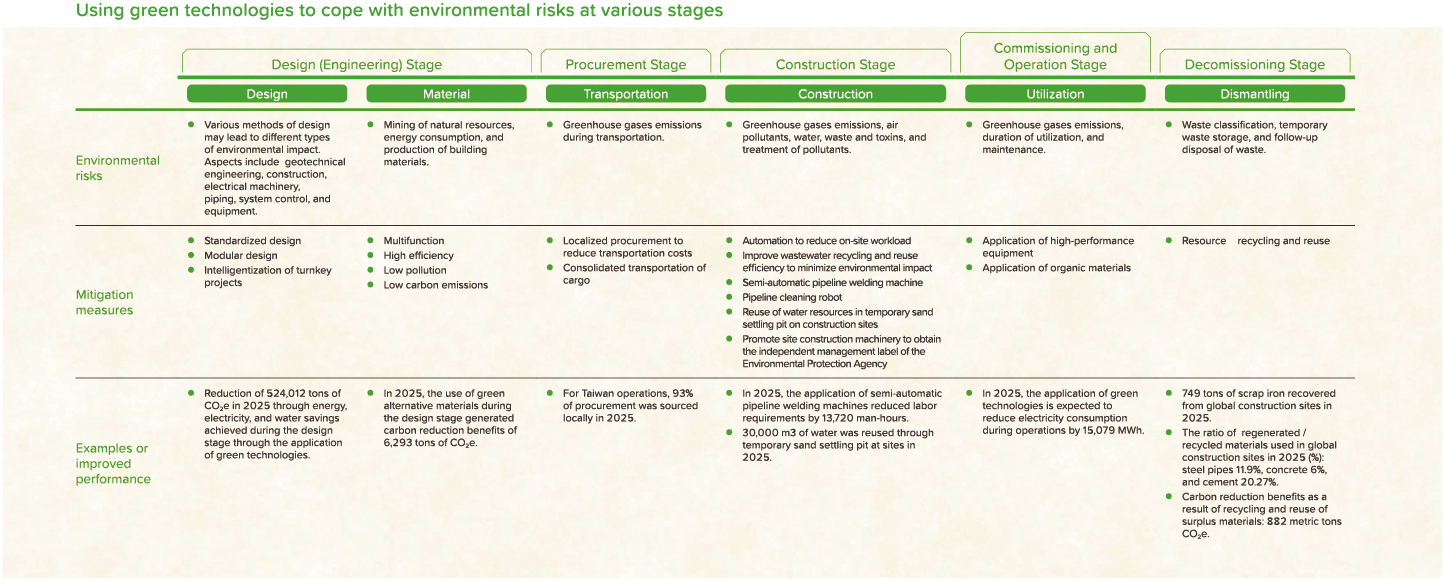
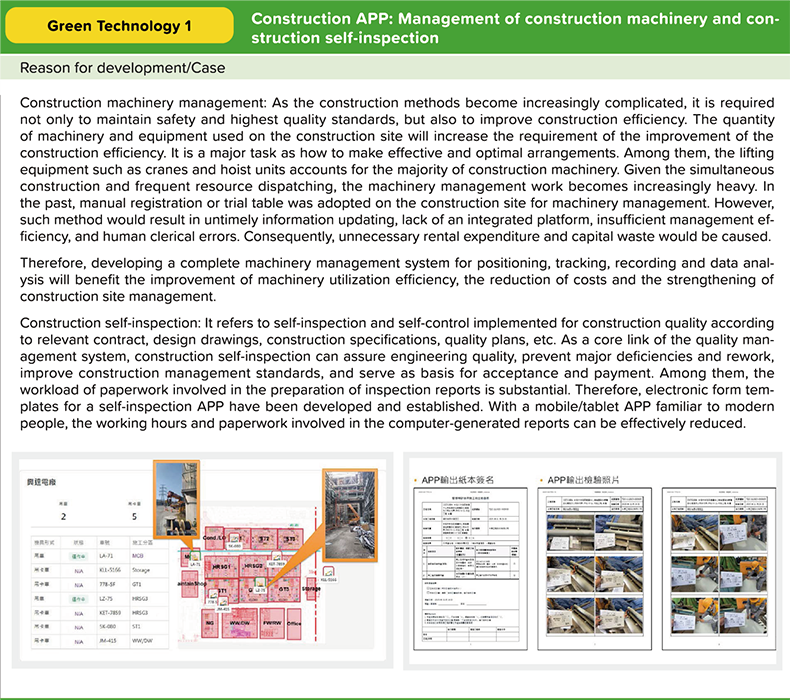
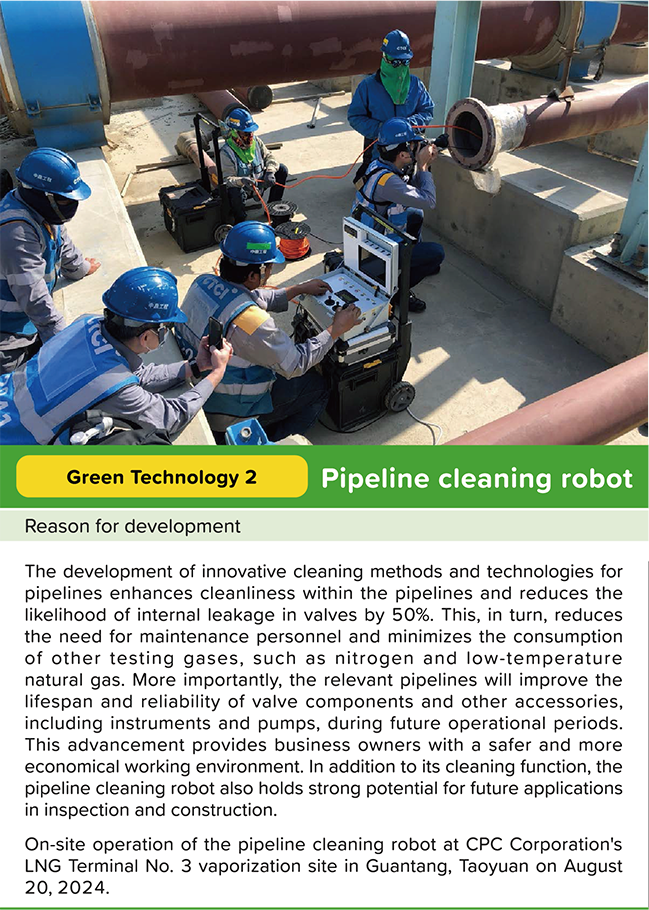
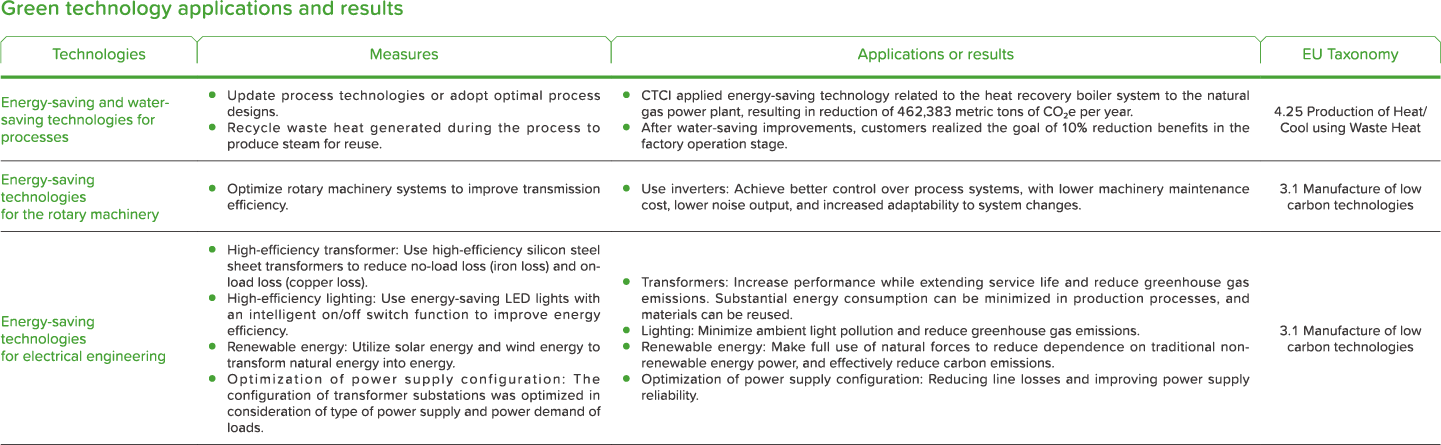
Over the past 40 years, CTCI has adopted the most advanced technologies to minimize environmental pollutant emissions, reduce energy and resource consumption, and minimize the environmental impact and cost. Currently, all of its engineering projects adopt the latest environmental protection processes as much as possible. One of the biggest technological challenges engineering companies face when it comes to sustainable management is to apply various green technologies in engineering, keep doing research, and develop momentum. As a forerunner in green engineering, CTCI has incorporated the idea of environmental protection into the company's sustainable operations. CTCI has a long history of commitment to the application, research, and development of green technologies. This includes improving energy efficiency, saving water, protecting the ecosystem, and creating a safe working environment. Given that many countries' authorities have been setting low carbon emissions targets for their economies, CTCI has developed various types of highly efficient environmental protection facilities and energy management technologies, which have been proven effective in real construction applications.The Company would proactively propose optimal options that are eco-friendly and energy-saving to its project owners, so that all parties can cope with climate change and achieve peaceful coexistence with the environment together. In order to continue to break through the innovation bottlenecks of green engineering, CTCI continues to look for green solutions, and at the same time expand the focus from basic technologies to research and development, so that CTCI gradually helps the entire engineering industry becoming greener. In line with the international trend, CTCI aggressively responds to climate change, reduces greenhouse gases emissions, and moves towards sustainable management of natural resources.

In response to green transformation, CTCI's CAPEX investment NT$12.55 million is made for the research and development of green technology in 2025, with annual OPEX of NT$572,000. The target of annual opex investment will be min. NT$500,000. Internal training courses were launched in CTCI University in 2025 to teach sustainability design principles. Specifically, sustainability courses on waste heat recovery, net-zero classroom, circular economy, and trends of sustainability knowledge were provided.

The table below presents the total revenue and the percentage of Group revenue generated byCTCI Group from EU Taxonomy-aligned sustainable economic activities between 2022 and 2025, including waste heat recovery for heating and cooling, low-carbon technology manufacturing, centralized wastewater treatment, and new building construction:

Taiwan Sustainable Economic Activity Identification
CTCI Group's business activities make substantial contributions to environmental objectives without causing significant harm and fall under both general and enabling economic activities as defined in the"Guidelines for Identifying Sustainable Economic Activities." Categories of enabling economic activities include renewable energy generation, facilities, and related components; research, development, and application of carbon capture, utilization, and storage (CCUS) technologies; equipment or system installation, technology development, and professional services for water conservation, water recycling, or the development of emerging water sources. In 2025, the total value of sustainable economic activities reached 18.7 billion, accounting for 20% of total revenue.
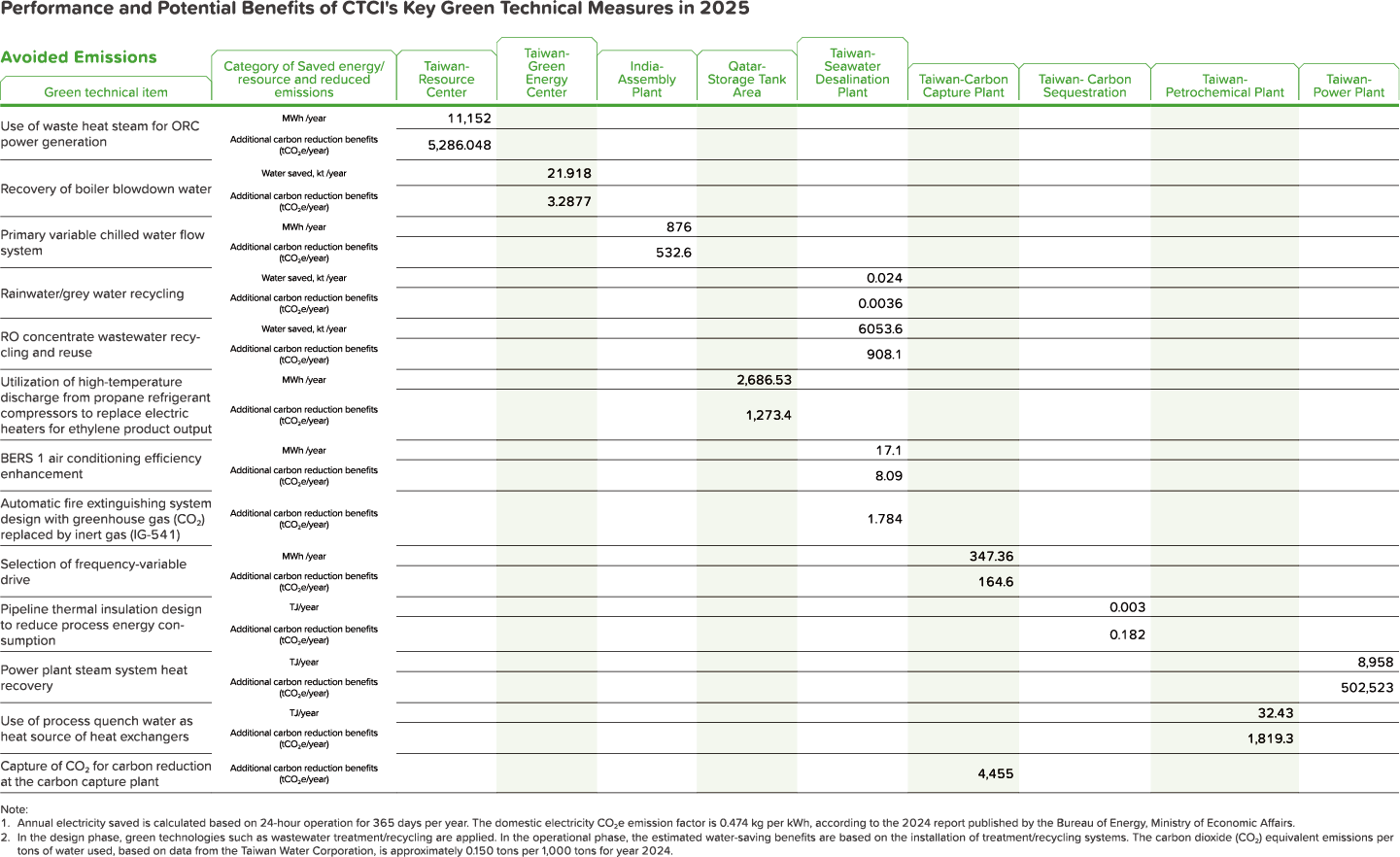
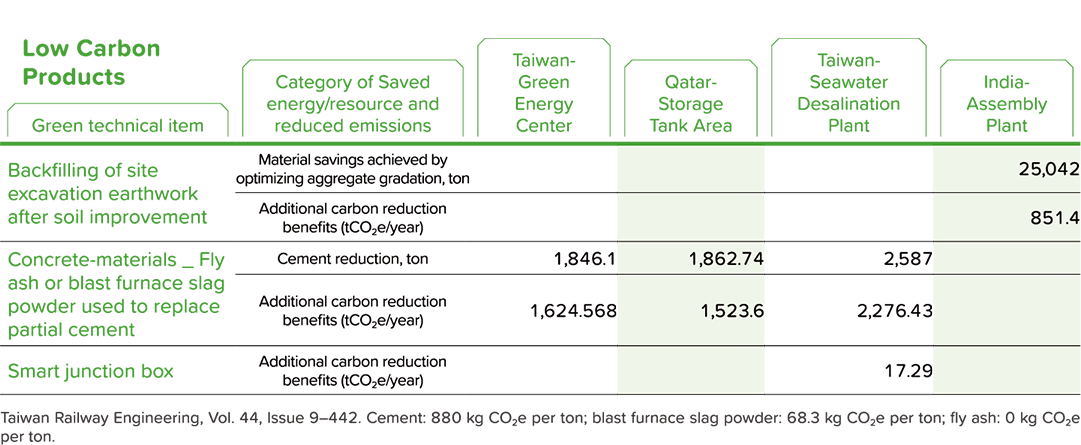
Regarding the performance and potential benefits of CTCI's key green technical measures in 2025, the expected carbon reduction benefit of avoiding emissions during the design phase is 531,702 mtCO2e, accounting for 20%% of the total revenue in 2025; the carbon reduction benefit of low-carbon products is 6,293mtCO2e, representing 7% of the total revenue in 2025. The combined carbon reduction benefits of avoided emissions and low-carbon products are expected to be 15,496,583 mtCO2e when all lifecycle stages from design, procurement, construction, commissioning to operation have been taken into account.

Transition to Low-Carbon Engineering
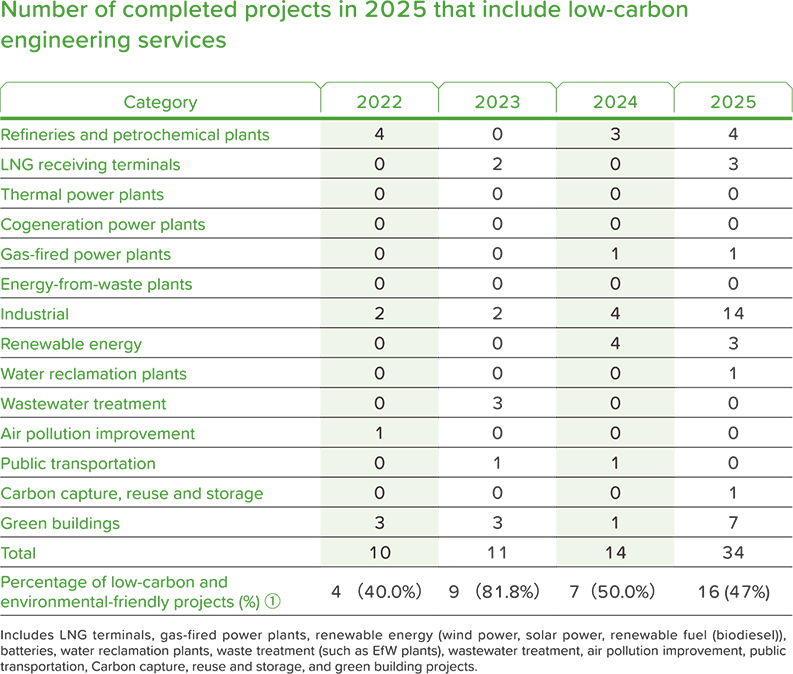
Among the various projects undertaken by CTCI Group, green projects include gas-fired power plants, LNG receiving terminals, wind power projects, solar power projects, renewable fuel projects (such as renewable diesel oil), battery plant projects, waste treatment projects (such as EfW plants), water reclamation plants, waste water treatment projects, air pollution improvement projects, public transport projects, Carbon capture, reuse and storage, and green building projects. As customers pay more and more attention, the proportion or green projects will increase year by year.

CTCI Group generated sustainable revenue from projects that obtained greenbuilding certifications, amounting to NT$25 million, NT$707 million, NT$609 million, and NT$9,827 million in 2022, 2023, 2024, and 2025, respectively. These revenues accounted for 0.027%, 0.683%, 0.508%, and 10.7% of total revenue for the respective years.
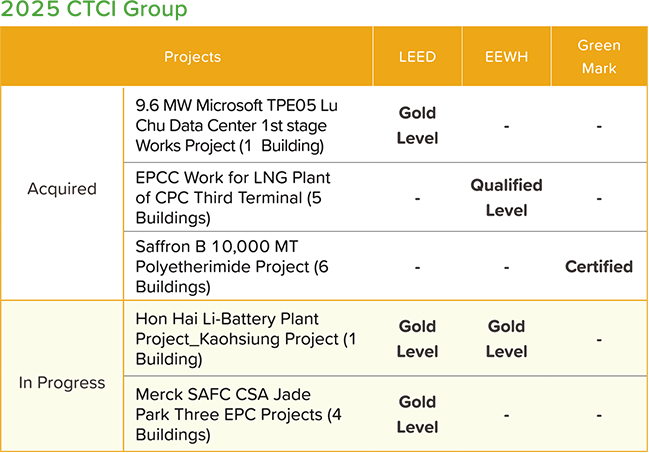
There were 16 low-carbon and environment-friendly projects among all projects completed
by CTCI Group in 2025. The ratio of low-carbon and environment-friendly projects contracted accounted for 47%, achieving the annual goal for the year 2025. In addition to the short-term goal of 35%, CTCI has added a medium-term goal of improving this ratio to 50% by 2030 and a longterm goal of improving this ratio to 70% by 2035.
The north Taiwan sewage system project contracted by CTCI Group has a total carbon emissions of 106,921 metric tons during the entire plant operation life cycle. In the design stage, green technologies such as wastewater reprocessing/recycling are adopted. In the operation stage, thanks to the implementation of the treatment/recycling system, the estimated water saving benefit throughout the lifecycle is 21.46 million tons, while carbon emissions reduction is 3,455 metric tons CO2e.

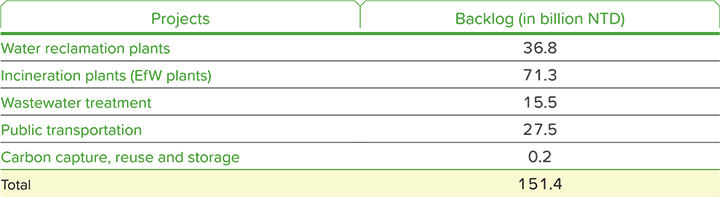
The total backlog of CTCI's fossil fuel and renewable energy projects in 2025 is NT$ 264.3 billion. No fossil fuel-related projects were canceled in 2025. The backlog of the non-energy projects related to mitigating climate change in 2025 is NT$ 151.4 billion, detailed as follows:
Given that considerable energy is consumed across the lifecycle of engineering projects, it is environmentally significant to reduce energy consumption during plant operations because it can help clients save operation costs, help achieve effective energy distribution, and reduce greenhouse gas emissions. CTCI has established a cross-department ESG task force, which is responsible for promoting and enhancing energy-saving and environmental protection management at construction sites as well as delivering energy-saving and carbon emissions-reducing services to customers. These technological services can help minimize the environmental impact of products and become a driving force for corporate growth once they become commercialized.