Sustainable Engineering

Strengthen Climate Resilience
Climate-Related Financial Disclosures
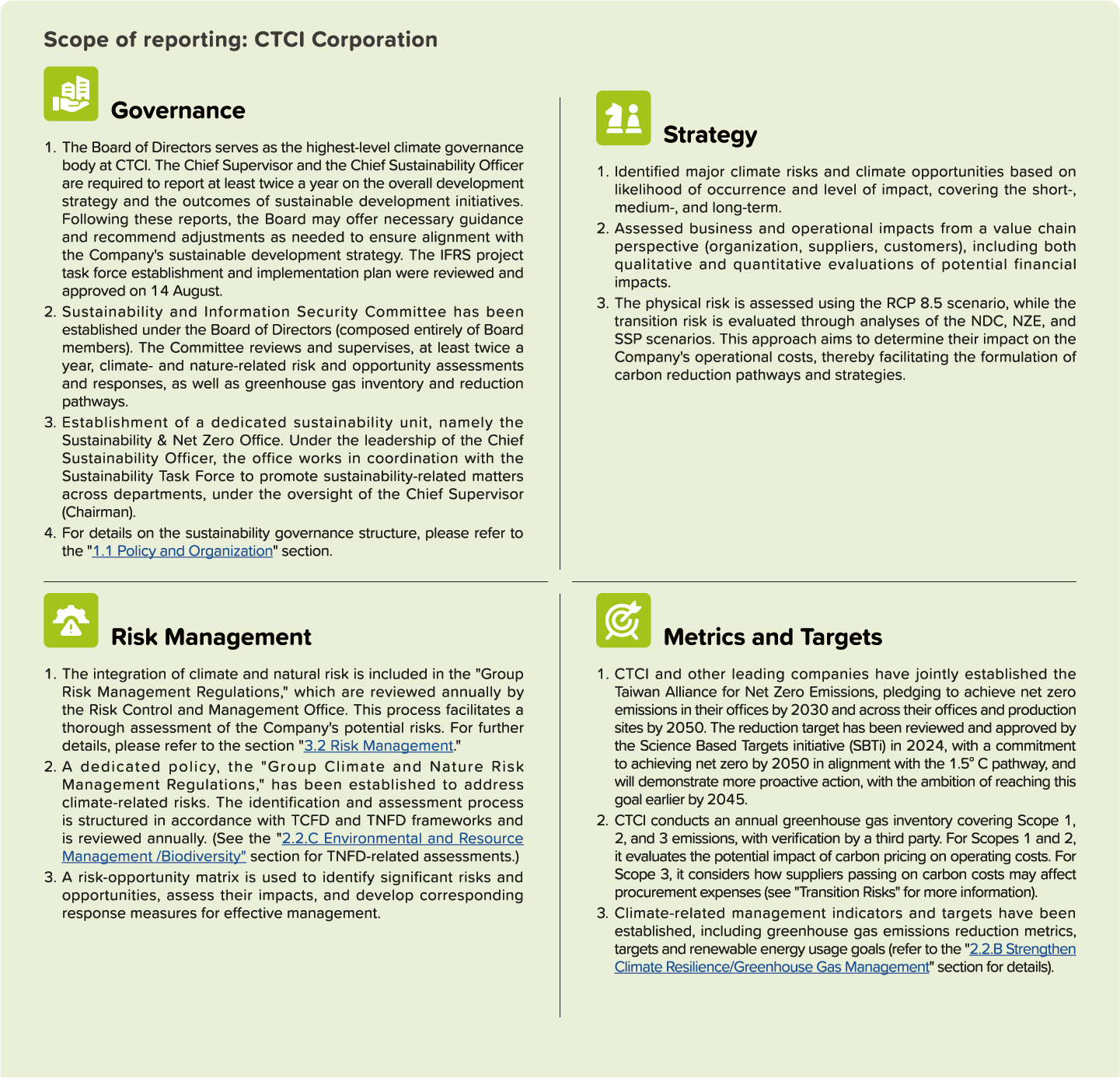
To assess the physical and transition risks related to climate change, measure and calculate the climate change impacts that CTCI, its suppliers, and value chain partners face, and
promote climate-related financial disclosure and communication among stakeholders, CTCI has incorporated the TCFD and TNFD frameworks in its sustainability management.

Implementation Process
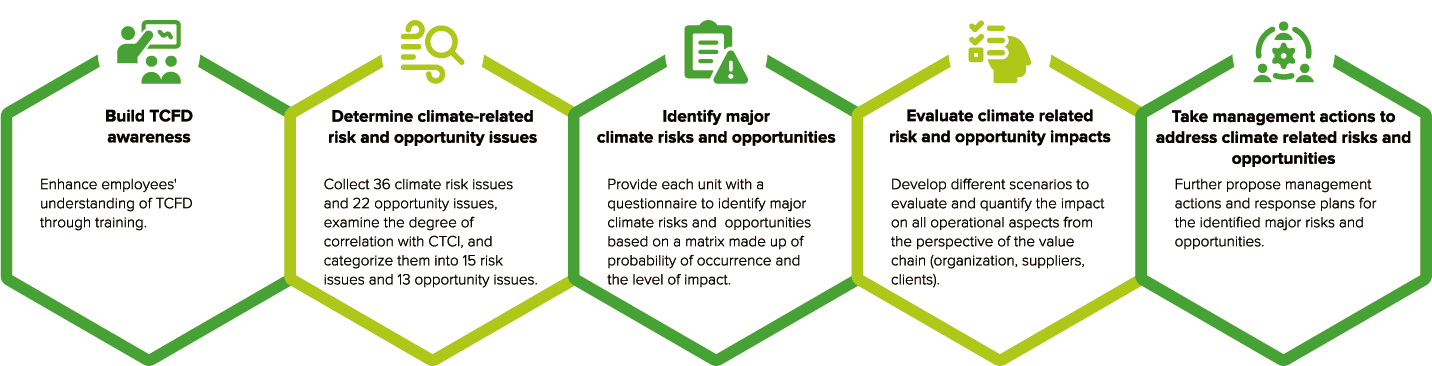
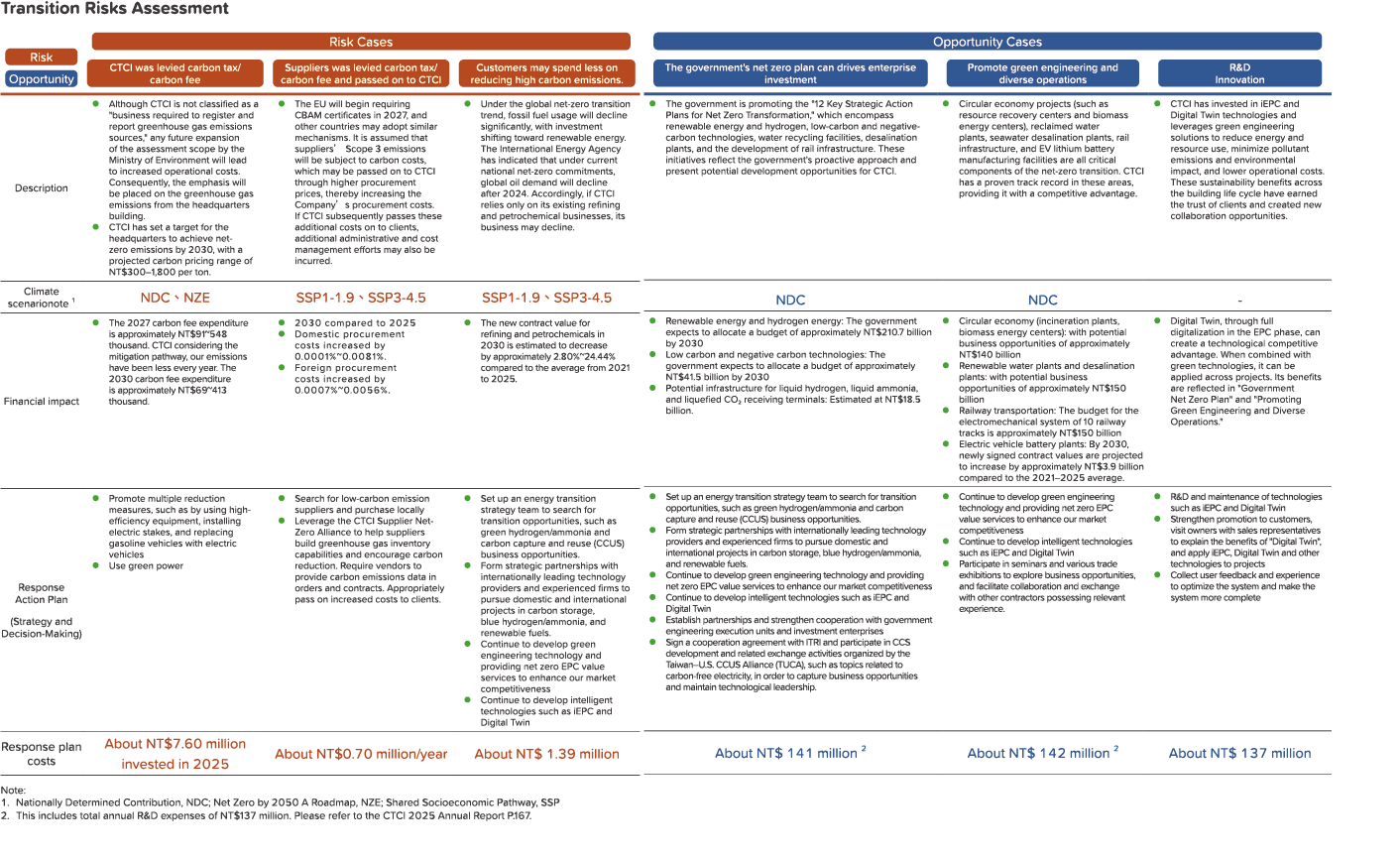
Climate and Nature Risk Management Regulations serves as the highest standard for CTCI when managing climate change issues for the company. Through continuous identification of climate change issues and the assessment and prioritization of their impacts on the company, members of the Sustainability and Net Zero Implementation Team collaborate to explore ways to manage and monitor these issues. They propose management actions and response measures to mitigate such risks and seize development opportunities. For further details, please refer to the 2025 TCFD report.
Build TCFD awareness
To improve the understanding and application of the TCFD among all employees, CTCI actively promotes internal training programs. Employees from project, business, administrative, and R&D departments are invited to participate in professional courses and seminars. Through a systematic training approach, staff are encouraged to consider potential climate-related risks and opportunities from the perspective of their own roles and responsibilities, and to assess possible impacts on operations and finances. The training also emphasizes practical application, helping employees identify and develop corresponding risk management and adaptation strategies. This ensures that while addressing climate change challenges, the company can also uncover innovation opportunities and strengthen its competitiveness.
Identify major climate risks and opportunities
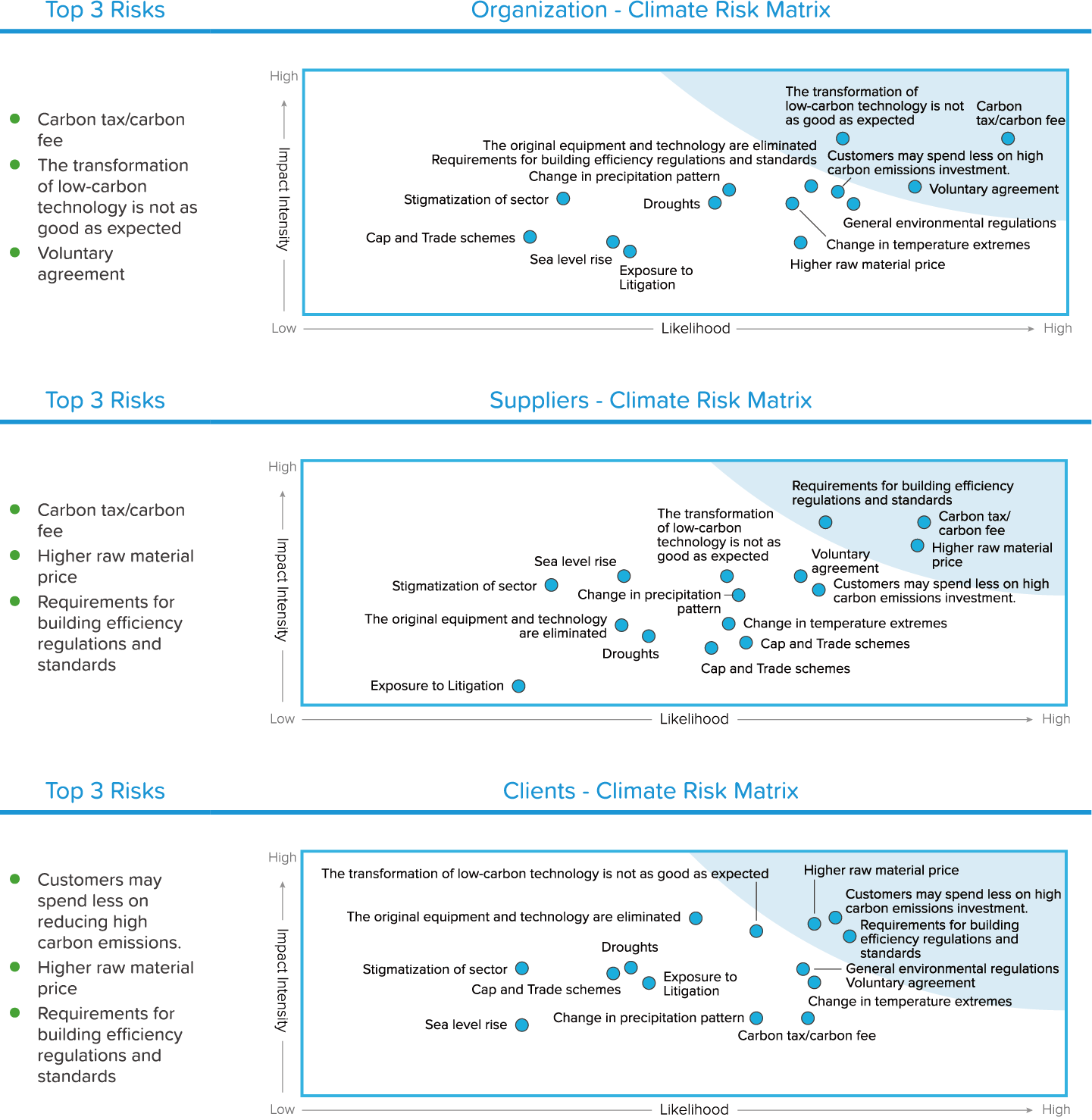
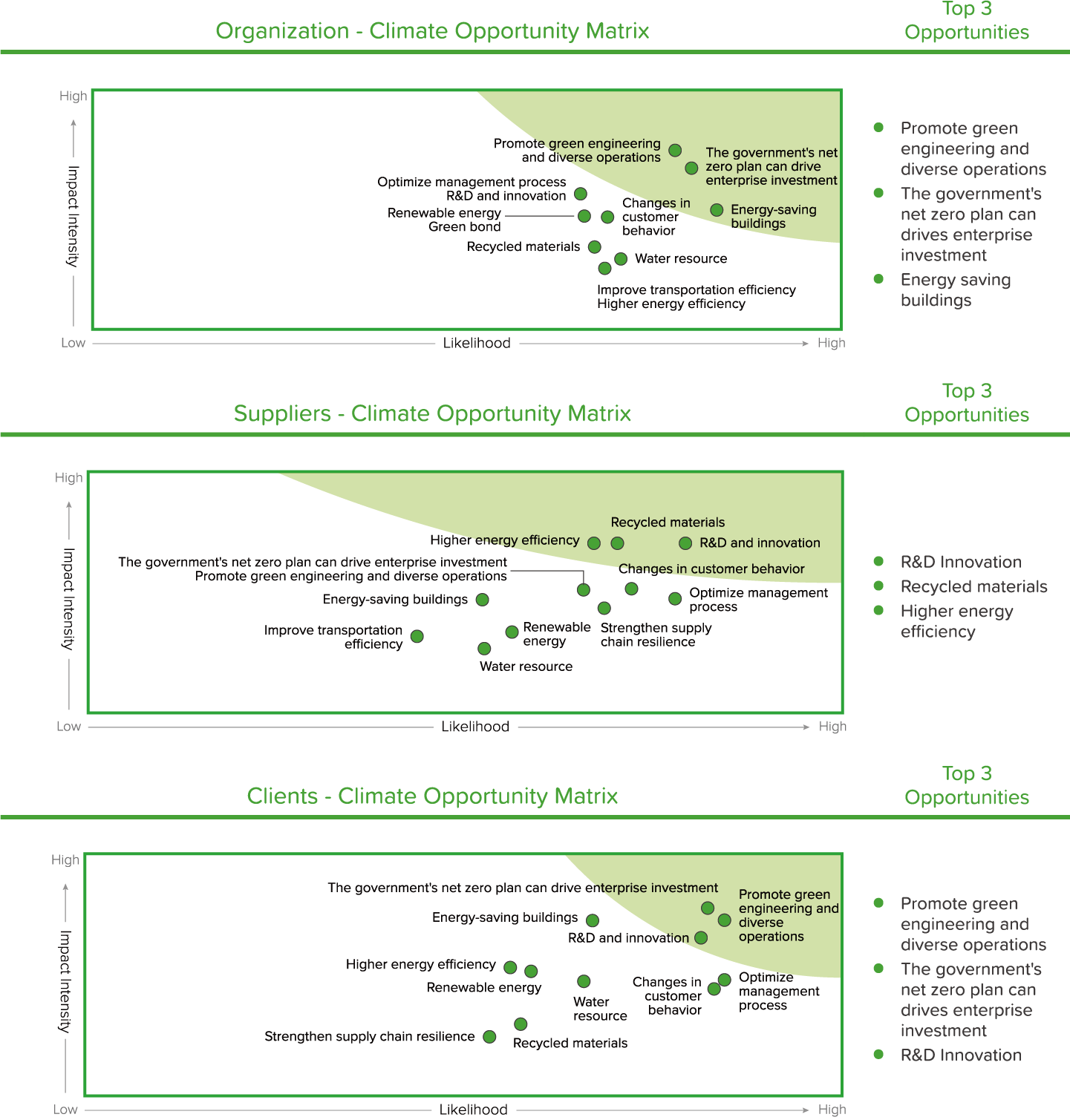
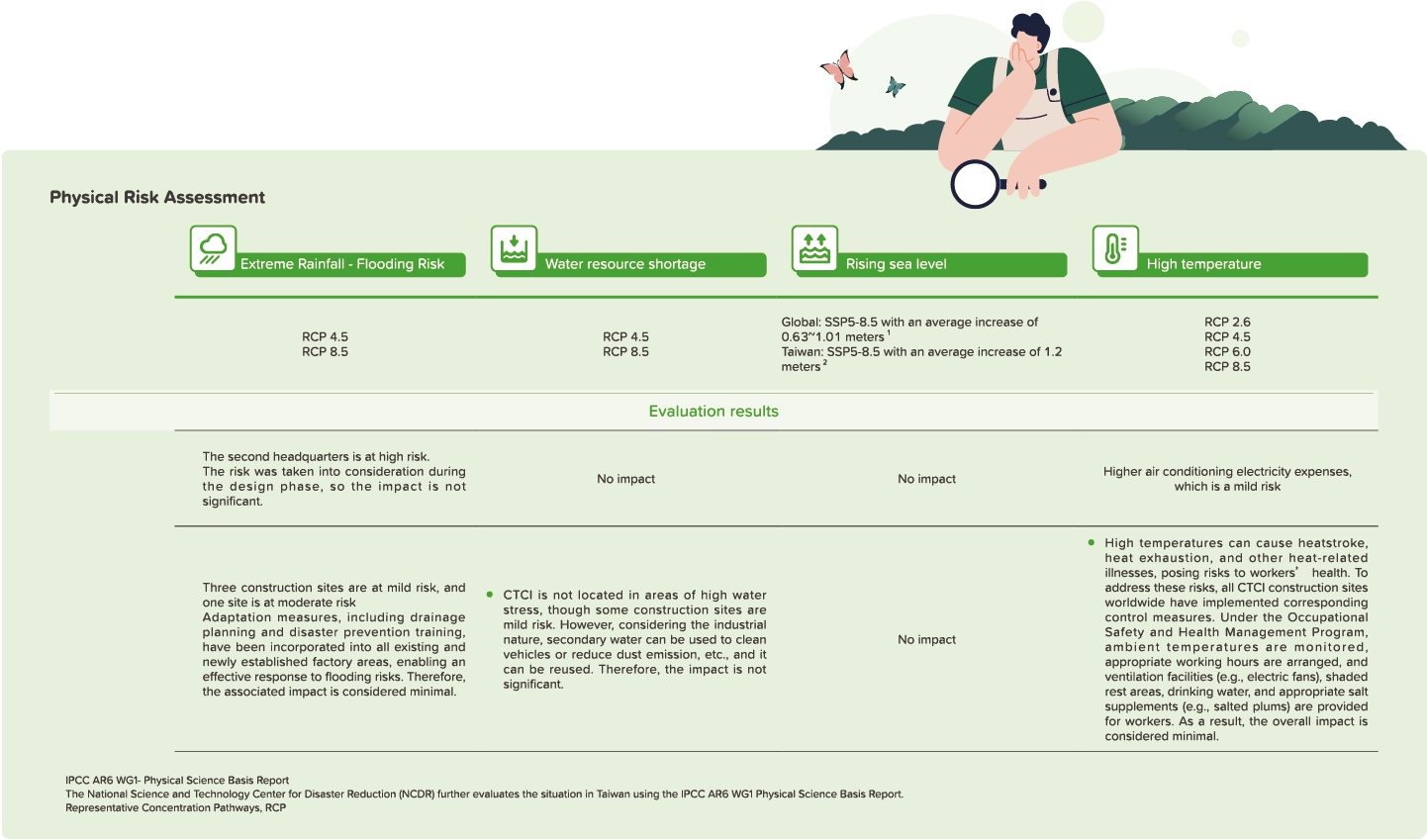
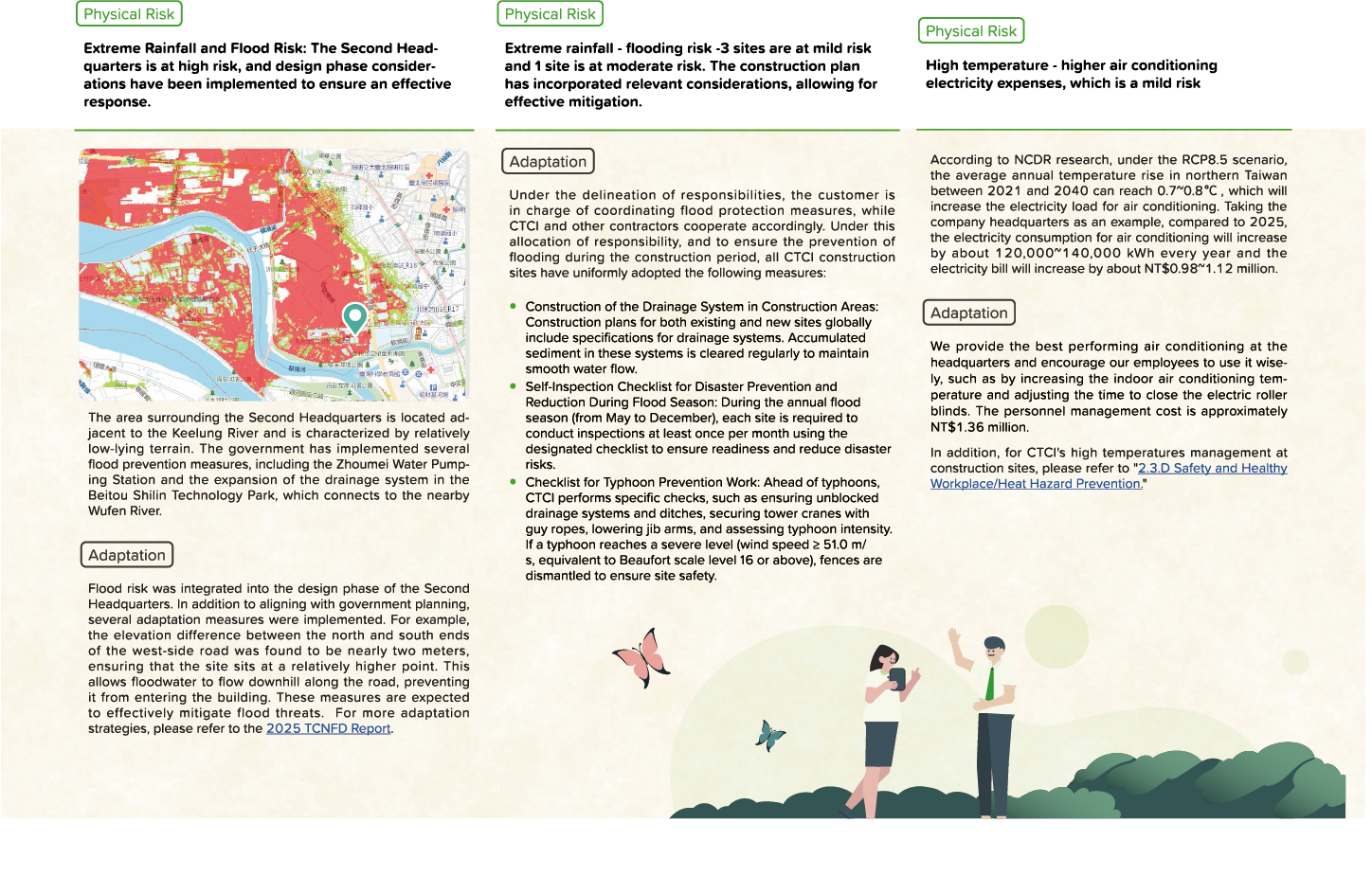
CTCI used its own operations as the scope of assessment and, with reference to TCFD categories of physical risks (short- and long-term) and transition risks (existing and emerging policies, regulations, technologies, markets, and reputational factors), designed a survey to identify impacts from a value chain perspective―covering the organization, suppliers, and clients. The results were used to evaluate business and operational impacts, and to develop a climate risk and opportunity matrix identifying major risks and opportunities in the short term (up to 2030), medium term (2020–2045), and long term (beyond 2045).
Greenhouse Gas Management
CTCI achieved an A (Leadership) rating in both the CDP Climate Change assessment and Supply Chain Engagement assessment in 2025.In terms of Dow Jones Dow Jones Best-in-Class Indices (DJ BIC) performance, CTCI has consistently delivered strong results, being included in the Dow Jones Sustainability Emerging Markets Index for 11 consecutive years and maintaining a position in the top 1% of S&P Global's Sustainability Yearbook, leading its global peers.CTCI's response to climate change risks and opportunities extends beyond its own operations, with increasing disclosure of indirect emissions. Through processes such as identification, analysis, calculation, and reduction, the Company actively encourages collaboration with upstream and downstream business partners to take collective action and contribute to greenhouse gas mitigation and emissions reduction.

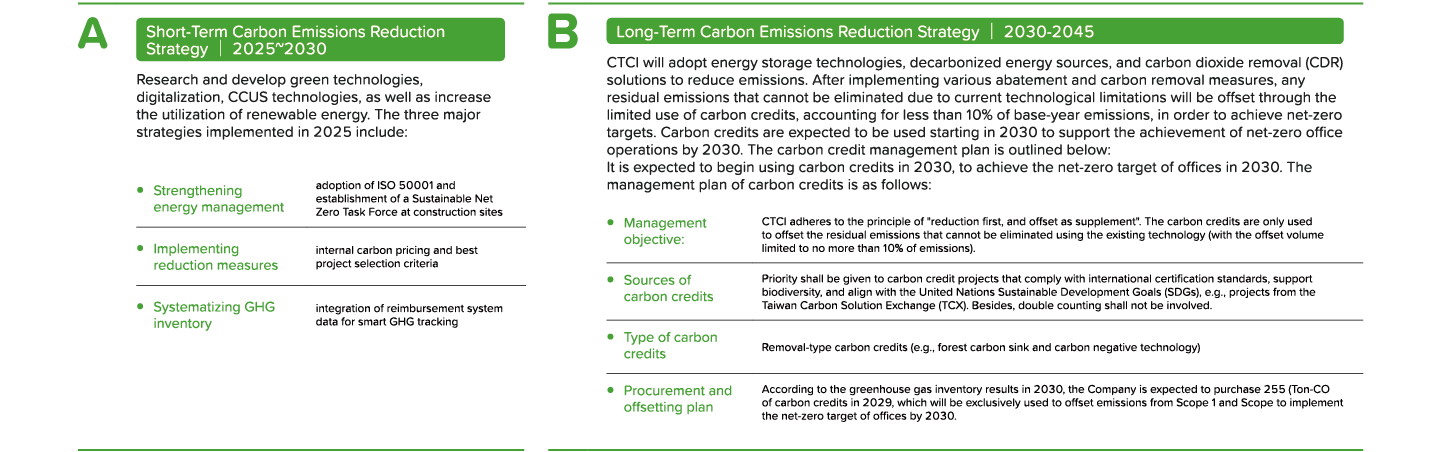
To further demonstrate its commitment to carbon emissions reduction, CTCI has set science-based targets aligned with the SBTi 1.5° C scenario, with 2022 as the base year, and these targets have been approved by SBTi.The Company's short-term target is to achieve a 45% absolute reduction in greenhouse gas emissions (Scope 1 and Scope 2) by 2030. The long-term target is to reach net zero emissions by 2050, with a defined mitigation pathway to support this goal. The organizational boundary covers 100% of revenue and 100% of base year (2022) emissions.To strengthen its decarbonization efforts, CTCI will continue to adopt more proactive measures, aiming to achieve net zero across all global operations by 2045, advancing ahead of the original 2050 target.
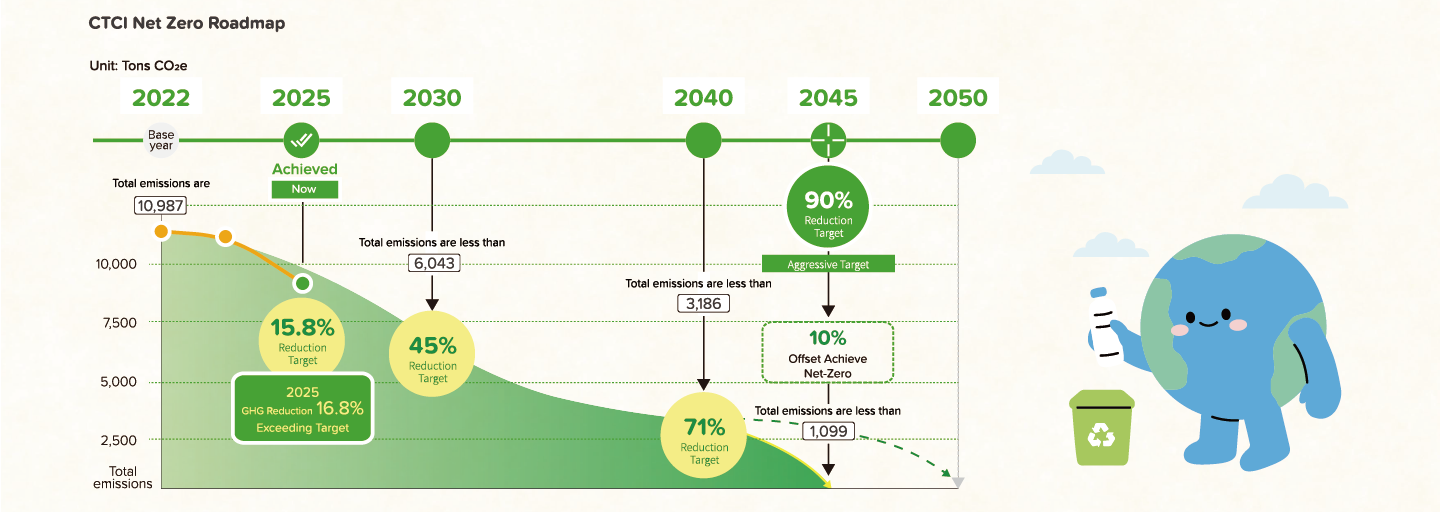
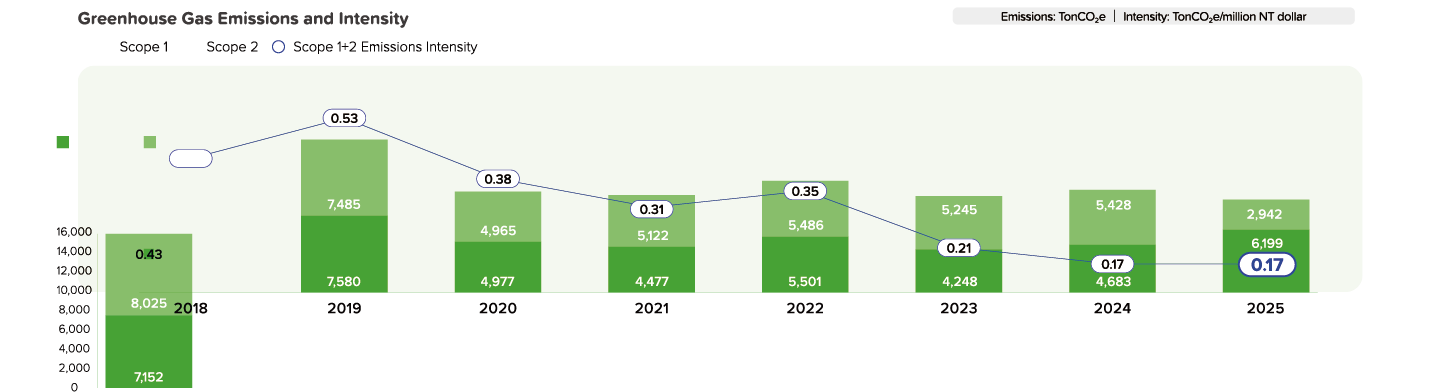
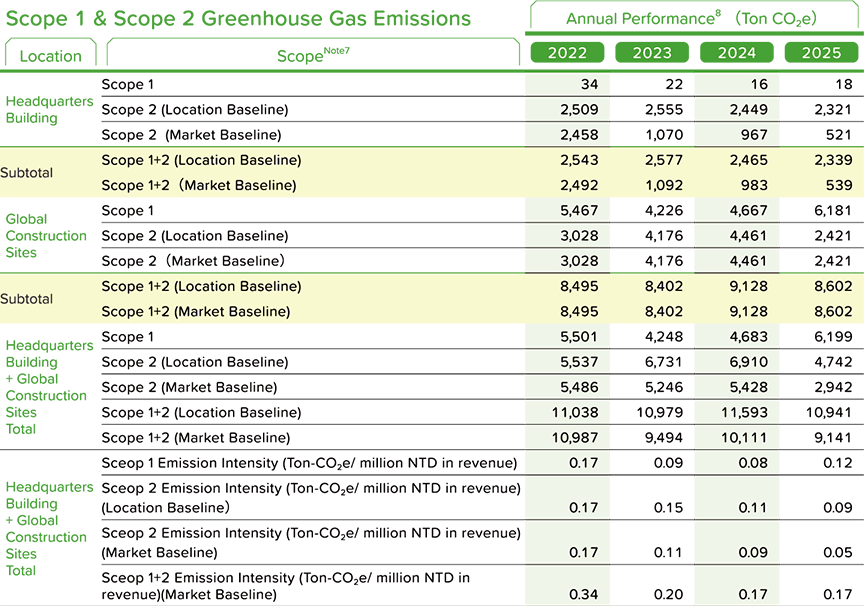
Fulfillment of carbon reduction at SBTi-aligned sites
| 2022 | 2023 | 2024 | 2025 | |||||||||
|---|---|---|---|---|---|---|---|---|---|---|---|---|
| Emissions (tCO2e) |
scope 1 | Scope 2 market based |
Scope 1+2 market based |
scope 1 | Scope 2 market based |
Scope 1+2 market based |
scope 1 | Scope 2 market based |
Scope 1+2 market based |
scope 1 | Scope 2 market based |
Scope 1+2 market based |
| CTCI Corp. | 5,501 | 5,486 | 10,987 | 4,248 | 5,246 | 9,494 | 4,683 | 5,428 | 10,111 | 6,199 | 2,942 | 9,141 |
| CTCI Development Corp. | 2 | 189 | 191 | 2 | 180 | 182 | 3 | 138 | 142 | 1 | 107 | 108 |
| CTCI Machinery Corp. | 987 | 4,071 | 5,058 | 530 | 2,073 | 2,603 | 738 | 1,858 | 2,596 | 425 | 2,302 | 2,727 |
| Sum | 6,490 | 9,746 | 16,236 | 4,780 | 7,499 | 12,279 | 5,424 | 7,424 | 12,849 | 6,626 | 5,351 | 11,977 |
| Note : The other wholly-owned subsidiaries are Paper Company, which has no carbon emissions. | ||||||||||||
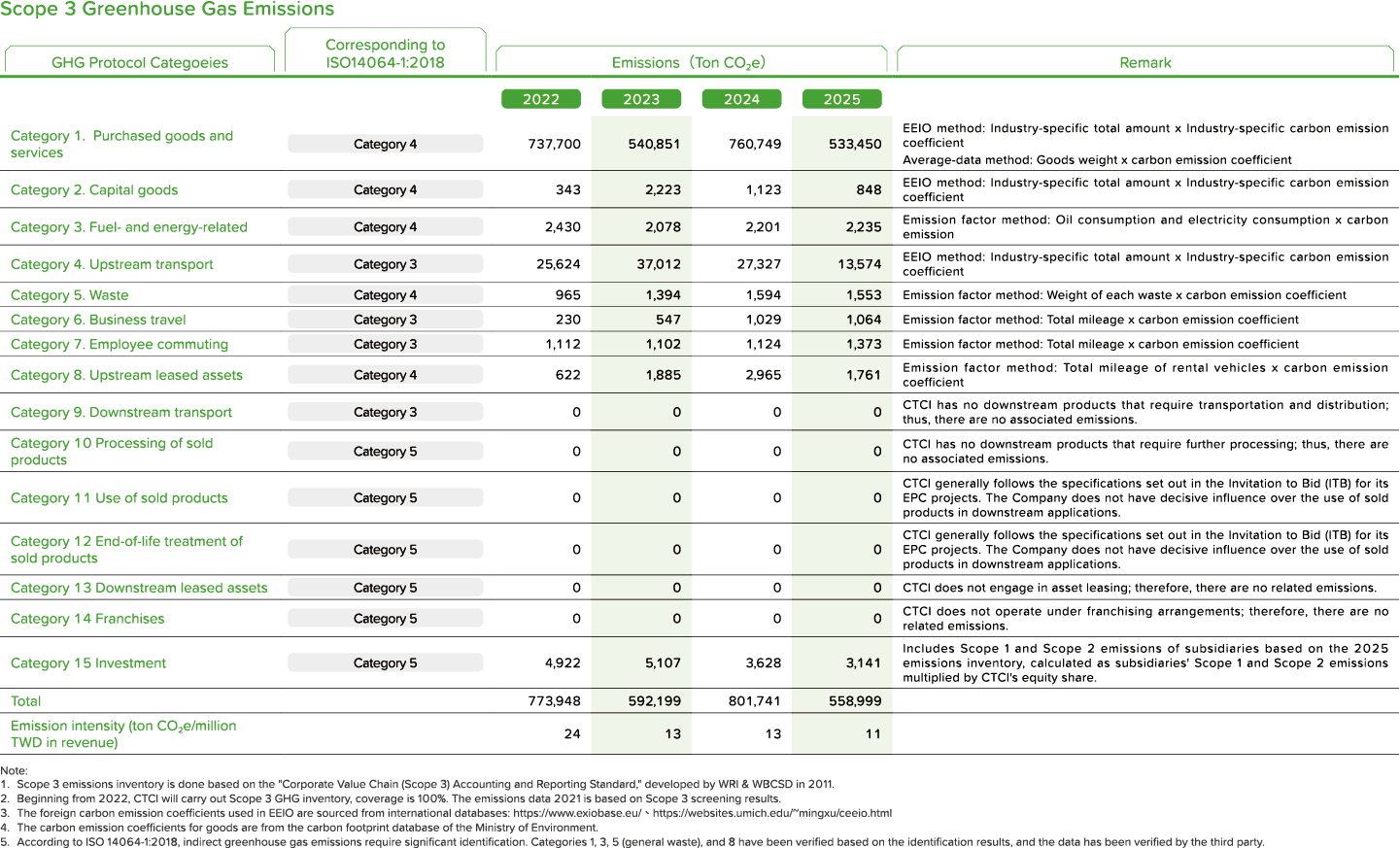
CTCI has begun implementing complete Scope 3 carbon inventory since 2022. For the reduction of Scope 3 emissions, the year 2022 is adopted as the base year, and 100% emissions in the base year is covered. The emission reduction shall reach 90% or above by 2050. CTCI will complete the establishment of supply chain engagement goals within 5 years since 2023, and suppliers included in the engagement will annually reduce at least 2.5% of Scope 1 and Scope 2 carbon emissions; for a long term, the Company will lead its suppliers to conduct carbon reduction toward the net-zero goal. For residual carbon emissions that cannot be eliminated with new technologies and new machinery (target less than 10%), moderate procurement of carbon emission rights for offsetting will be encouraged to achieve the net-zero goal by 2050. The Company plans to purchase Taiwan's removal-type carbon emission rights since 2046, while externality is required and high permanence (>1000) is prioritized. For the carbon emission rights, the internationally recognized standards shall be adopted, and third-party verification shall be implemented. Besides, the rights shall be registered to avoid double claiming, and will be immediately canceled after offsetting. In 2025, the overall emission intensity of Scope 3 declined by approximately 54% compared with that in the base year. The emission intensity was slightly decreased compared with the previous year. CTCI will continue march towards the net-zero goal.

Moreover, CTCI has established the "Supplier Net Zero Alliance" to nurture the greenhouse gas management capabilities of suppliers that have participated in the Net Zero Alliance. In the future, we will encourage our suppliers to reduce their greenhouse gas emissions in stages and establish a reward system to achieve the goal of the setting near-term supply chain engagement within 5 years. It is expected that by 2030, the Scope 3 carbon emission intensity of CTCI per million in revenue will not exceed the base year (2022). For the long term goal, CTCI will purchase low-carbon products, make the Supplier Net Zero Alliance more influential, and encourage our suppliers to calculate their product carbon footprints, and lead our suppliers towards net zero in 2050, the long-term target. Please refer to the "2.1.E Sustainable Supply Chain Management/Sustainable Supply Chain Management Mechanism" section for the effectiveness of Net Zero Alliance.
Carbon Footprint Promotion Plan
As a non-manufacturing engineering services company, CTCI does not produce a single, fixed product, making it difficult to directly implement product carbon footprint assessments. However, in response to the urgent issue of carbon reduction, CTCI actively participates in and provides project-based carbon footprint management services for clients. For example, in 2022, CTCI conducted a "Solid-State Battery Product Life Cycle Assessment Consulting Project," assisting the client in evaluating the product's life cycle carbon footprint and subsequently proposing carbon reduction strategies and improvement suggestions. This demonstrates CTCI's professional expertise in carbon footprint management and reflects its support for and contribution to clients' sustainable development.

In addition to project services, to further strengthen carbon footprint management and establish industry benchmarks, CTCI has actively developed Product Category Rules (PCR) for Engineering Services, aiming to reduce the variability caused by differences in engineering project scale and nature, while ensuring comparability and reproducibility. The PCR has successfully passed the review of the Ministry of Environment and was officially announced on September 18, 2025. Subsequent carbon footprint evaluations and management will be conducted in accordance with this standard, along with obtaining ISO 14067 carbon footprint verification and carbon labeling.
Carbon Pricing Implementation
CTCI continuously monitors global and domestic trends in carbon pricing and adopts internal carbon pricing as a tool for managing climate change risks. This approach supports the promotion of carbon reduction actions and the enhancement of energy efficiency, ultimately aligning with the near- and longterm reduction targets approved by the Science Based Targets initiative (SBTi), and guiding the company toward achieving net-zero emissions at office sites by 2030 and at production and service sites by 2050. The internal carbon price is established with reference to international carbon pricing trends, including
the World Bank's State and Trends of Carbon Pricing report, the EU Emissions Trading System (EU ETS), and Taiwan's carbon fee framework. CTCI also considers national net-zero outlooks, regulatory developments, and industry best practices for pricing and implementation strategies. The internal carbon pricing mechanism was developed in 2022, and the price has been adjusted to USD 100 per tCO2e as of 2025. Through a shadow pricing mechanism, carbon costs are integrated into business operations and decision-making processes, covering both Scope 1 and Scope 2 greenhouse gas emissions. Each business unit calculates its emissions based on operational control, and carbon pricing is incorporated into performance evaluations for both managers and project personnel, thereby
strengthening organizational awareness and response to climate-related issues. By implementing internal carbon pricing, all business units are encouraged to proactively consider the impacts, risks, and management costs associated with carbon emissions during their operations. This drives the execution of tangible carbon reduction measures and ensures the effectiveness of internal carbon pricing as a management tool, providing a basis for decision-making in long-term low-carbon transformation.
Circular Economy
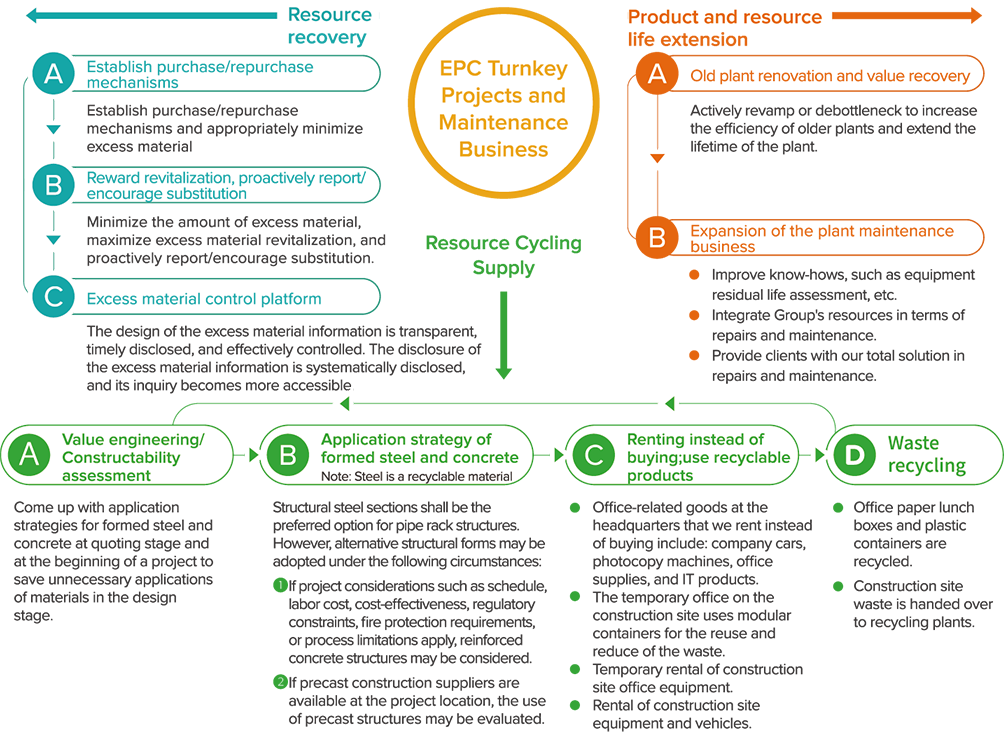
CTCI Group actively uses its core engineering capabilities to pave the way towards a circular economy model in engineering for its peers. There are three main aspects, which are resource cycling supply, resource recovery, and product and asset life extension. These also match three other aspects, namely strategy formulation, management and execution, and business development. In terms of resource cycling supply, CTCI proactively provides renewable, recyclable, and biodegradable resources, and changes product design thinking appropriately. In terms of resource recovery, when carrying out EPC maintenance work, CTCI would make every possible effort to convert waste materials into resources instead of downgrading them for recycling. In terms of extending the life of products and assets, CTCI
tries to maintain their economic value through professional repairing, upgrading and remanufacturing. In addition, thanks to the fact that circular economy and waste reuse concepts have been gradually adopted by the industry, the total power generation capacity of the EfW plants in Taiwan, operated by our subsidiary ECOVE, has reached approximately 1,445 GWh a year.