Talent Development

Career Development and Training
Workforce Analysis and Planning
Given that CTCI is a project-oriented organization with a large workforce, the Company has established Regulations Governing Organizational Management and Career Development with reference to the management philosophy of agile organization in order to improve its organizational agility and operational resilience. This document is used as a foundation for the organizational structure design and position allocation in response to the operational strategic adjustment and business development needs. Through the strengthening of cross-departmental collaboration, customer-oriented thinking and continuous learning culture, the Company aims to build a flexible and highly efficient project-oriented organization.

With respect to workforce planning mechanism, the Company conducts regular annual review of overall workforce allocation, comprehensively evaluates the supply of external talents, market competition dynamics, internal cultivation outcomes, employee turnover and retirement trends, and organizational change requirements, and then proposes difference analysis and improvement measures on this basis. Furthermore, the Company adjusts its annual workforce allocation plan in a dynamic manner every quarter to ensure the close linkage of human resources with the operational strategy.
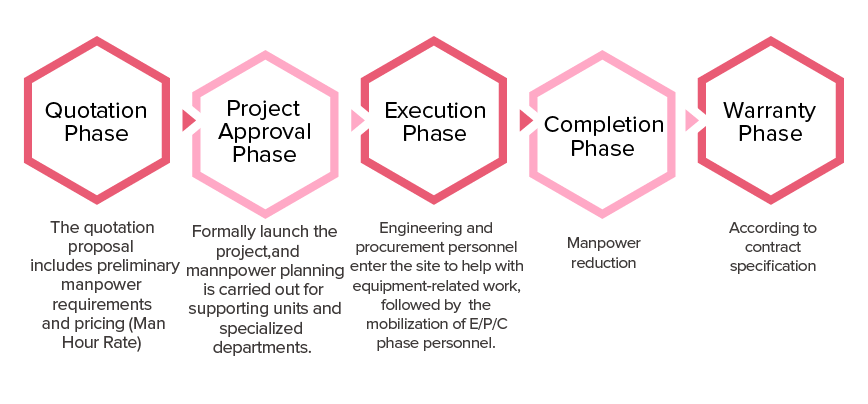
To align with the project operation model, over 80% of employees (excluding logistic support units) directly participate in quotations, engineering design and project implementation. The cross-departmental collaboration mechanism is initiated from business development and quotation stage, and the "project code" system" is adopted for cost control and performance tracking, to strengthen the transparency of project management and the resource utilization efficiency.
Performance Evaluation
CTCI adopts a project-based organizational operation model. To ensure a comprehensive and objective assessment of employees' annual performance and development potential, it has established an evaluation system that integrates "goal management" and "performance management," and links performance results to salary adjustments and bonus allocation mechanisms in order to strengthen incentives and enhance overall organizational effectiveness.

With the exception of consultants, external professional engineers, part-time student workers, summer interns, employees who are on unpaid leave of absence for more than nine months, and employees who joined the Company after performance appraisal starts, all other employees are included in the annual performance appraisal process, achieving 100% coverage and ensuring the fairness and comprehensiveness of the evaluation system.
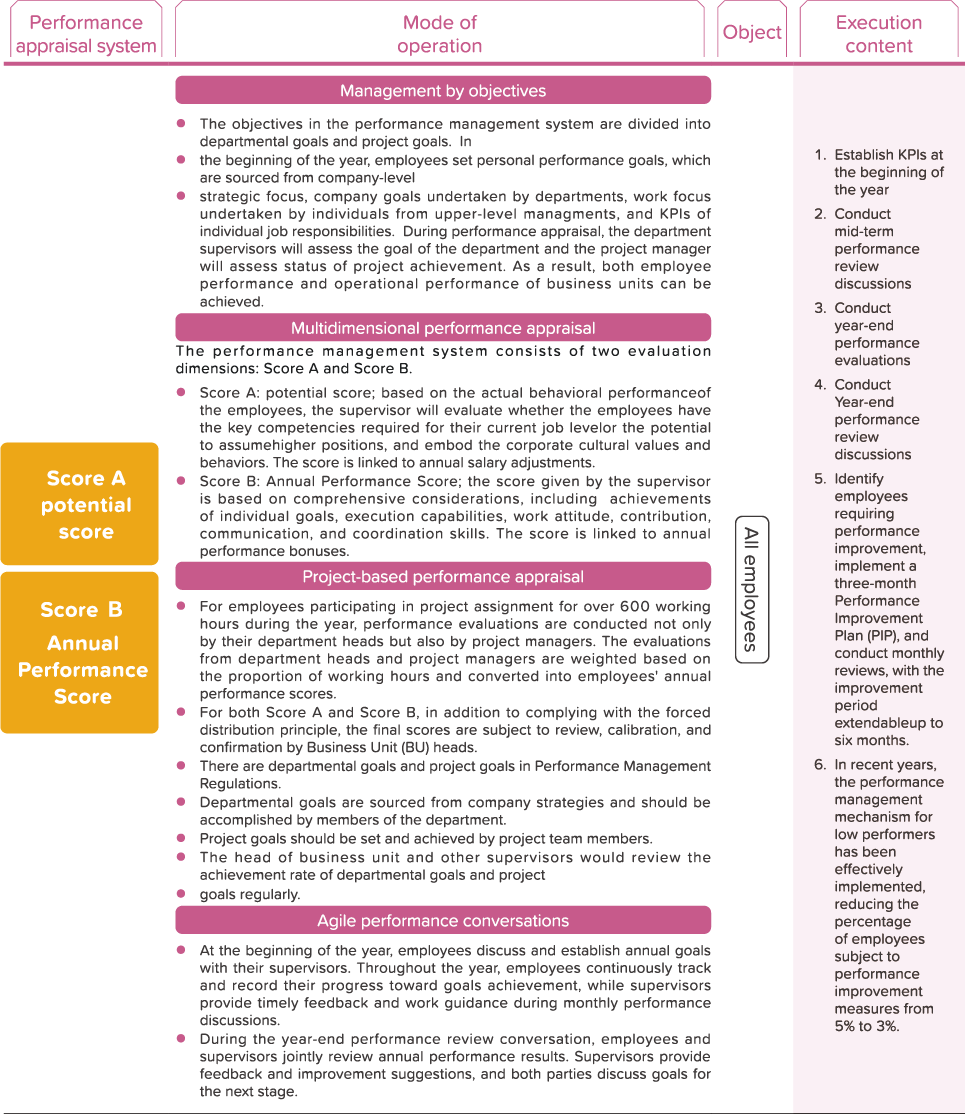
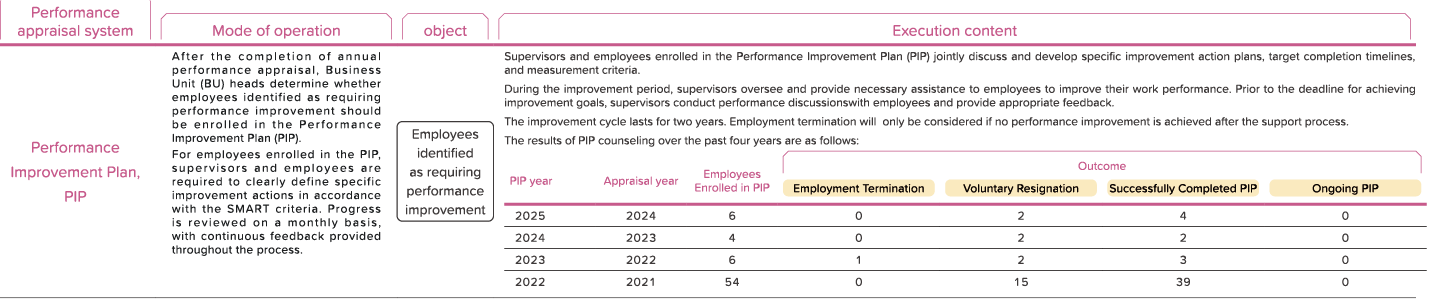
To ensure that employees clearly understand their individual contributions and performance, the performance system allows for the inquiry of supervisor comments and facilitates two-way communication through annual performance discussions, serving as a reference for work objectives and personal development. Since 2020, CTCI has implemented a company-wide key performance indicator (KPI) system, organized optimization briefings to assist various departments in setting specific goals, and encouraged supervisors to conduct monthly one-hour meetings with employees. This initiative aims to proactively care for employees and provide feedback, enabling them to have a clearer understanding of their responsibilities and future development directions.
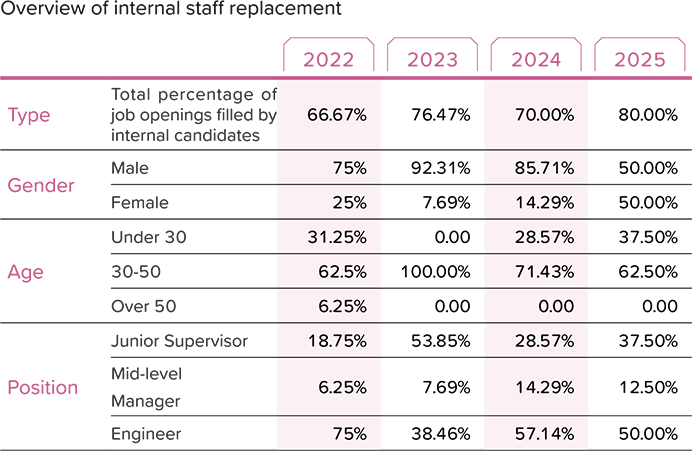
1. As for career planning, in order to strengthen talent nurturing and use human resources effectively, an internal rotation platform is established to enhance the internal development opportunities of talents, and appropriate mechanisms are set up for position rotation according to colleagues' personal career planning.
2. Job rotation is categorized into two types. The first type is colleague/department-initiated rotation, while the second type focuses on talent development by strengthening employees' experience and capabilities, preparing them as potential successors for future key positions In terms of career development and promotion mechanisms, CTCI believes that both capabilities and potential are equally important. Through job rotation, it aims to broaden employees' perspectives and enhance their professional capabilities.
3. The first type applies to employees who have served in the same position for two years or longer. Employees may apply for internal job rotation based on their career development plans and available rotation opportunities.
4. This mechanism is designed to strengthen talent development, optimize workforce allocation, enrich employees' work experience, encourage innovation and breakthroughs, and enhance talent growth and mobility.
5. When vacancies arise within the Company, internal job postings are prioritized to promote internal talent mobility and enhance employee morale.
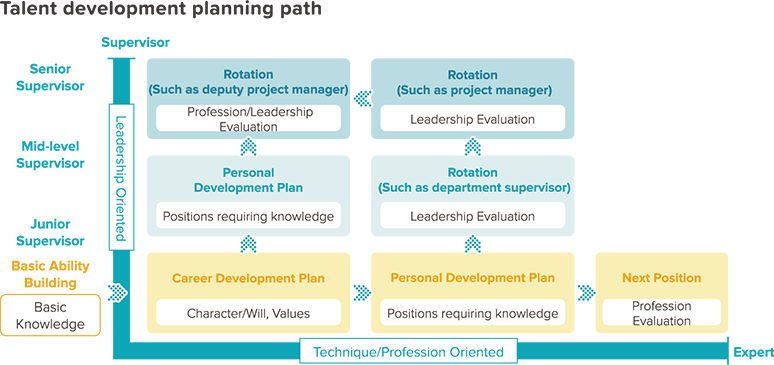
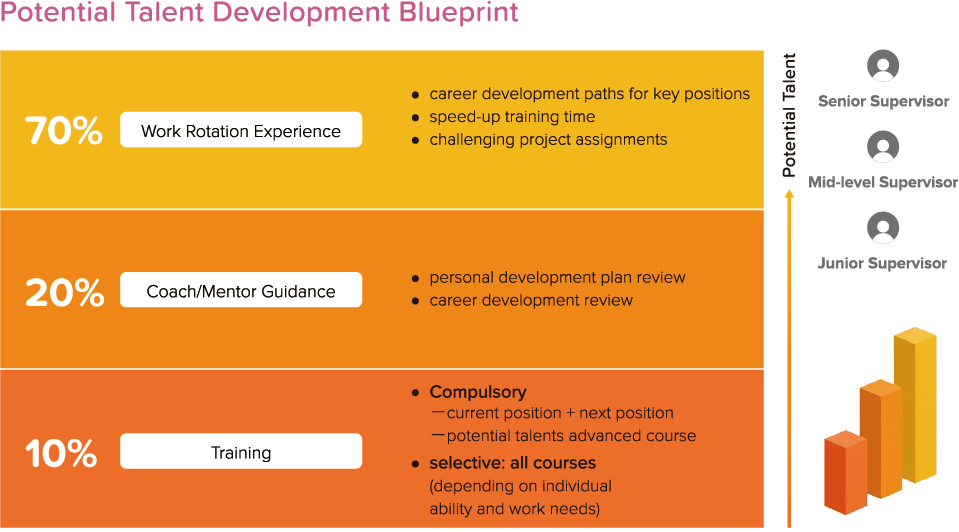
6. The second type focuses on potential talents. Through proactive succession planning for key positions, CTCI develop future department leaders capable of taking on independent responsibilities within 10 years. Their career development plans are supported by on-the-job training (OJT) , with structured programs, mechanisms, and practices designed to accelerate talent growth. An operational manual has also been developed for implementation across the Group.
7. In recent years, with the establishment of the Advanced Technology Facilities Business Operations (ATFBO), the Company has encouraged colleagues to embrace new challenges and adapt to the characteristics of this business unit, such as a faster-paced and more flexible working environment, by providing special allowances for the employees transferring to this unit.
8. In addition to financial incentives, CTCI University and its affiliated colleges have jointly developed specialized high-tech training programs to enhance employees' industry knowledge and provide the necessary training required for business development.
Competence Development
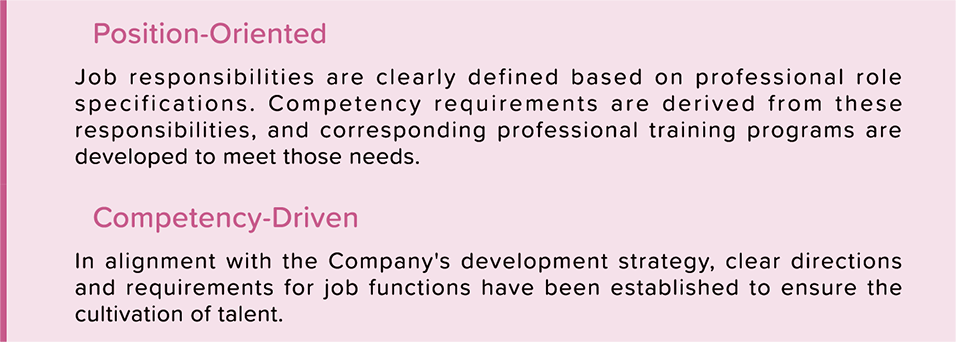
CTCI actively invests in talent development, attracting professionals and providing comprehensive education and training. Based on different job categories and career stages, the Company develops Individual Development Plans (IDPs) and strengthens management competency development. Through mentorship programs and digital learning platforms, CTCI supports employees in continuously enhancing their professional capabilities and management skill. Meanwhile, CTCI promotes knowledge transfer and expert systems. Through managerial guidance and cross-departmental experience sharing, key technologies and practical experience are effectively transferred across global locations, gradually shaping a learning organization and enhancing overall competitiveness.
Senior employees are valuable assests to CTCI. The Company has established a comprehensive re-employment mechanism for retired employees, along with succession and advisory systems. By leveraging the extensive experience and expertise of retired employees, the Company promotes knowledge transfer, optimizes recruitment and training resources, and benefits from their strong organizational commitment and stability.

Re-employed retirees can support project execution and contriute their professional experiences, providing advantages in passing on practical knowledge. As a hub for talent development, CTCI is committed to guiding and enhancing the design capabilities of domestic and overseas subsidiaries while promoting talent localization. The re-employment mechanism not only enables retired employees to continue contributing their expertise, but also helps the Company to bridge competency gaps, foster cross-generational collaboration, and promote age diversity and inclusion in the workplace.

Currently, CTCI has 40 re-employed retirees and 7 re-employed consultants serving in various roles, including consultants, project supervisors, and project managers. Some continue to support design-related work in engineereing departments, while others provide assistance with construction activities at construction sites. Through workplace mentoring and knowledge transfer provided by these experienced professionals, younger employees are able to shorten their learning curve and accelerate professional development.
Talent Cultivation
CTCI has implemented a Key Position Succession Program to identify Key Positions, High Potential Talent, and Young-Potential Talent. Comprehensive assessments are conducted based on professional expertise, performance, language proficiency, and personal attributes to strengthen the development of its talent pipeline. From 2021 to 2025, 15 employees were selected for the Young-Po Plus Program. The Group Chairman serves as the "Group Mentor," sharing experiences and providing customized development plans based on individual characteristics. The program aims to develop talents with global business management capabilities within ten years, ensuring the Company's sustainable competitiveness.


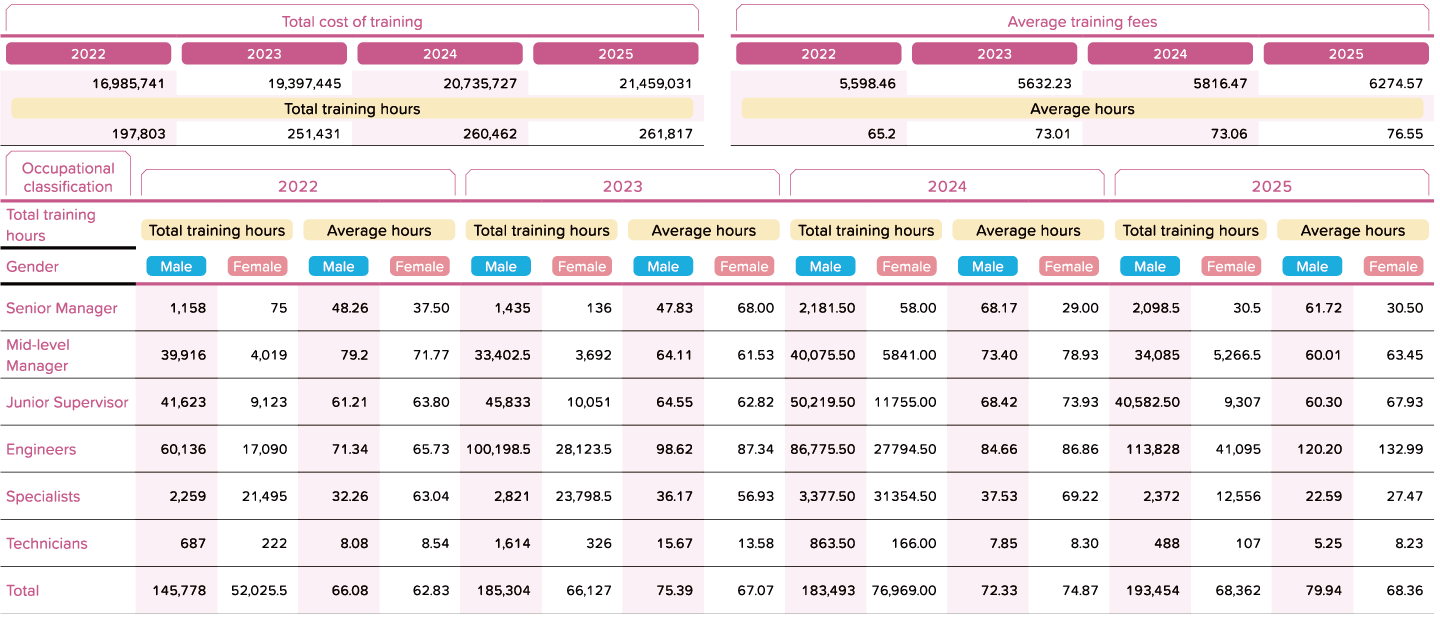
Training Effectiveness
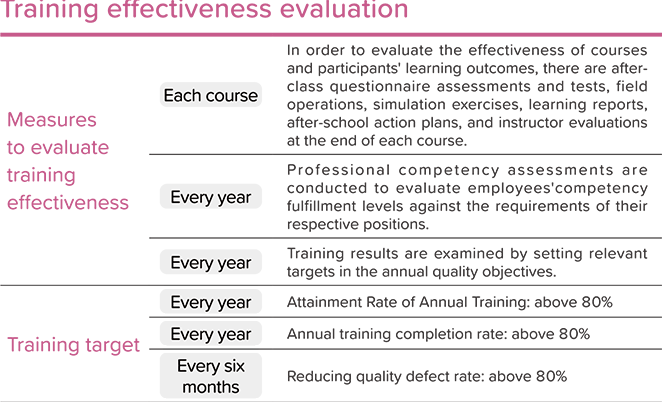
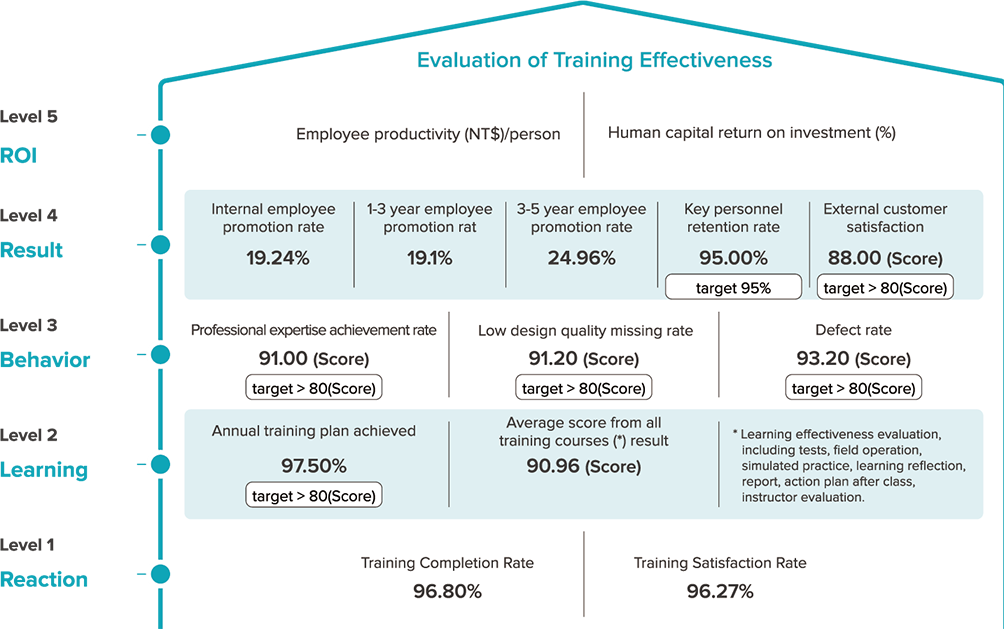
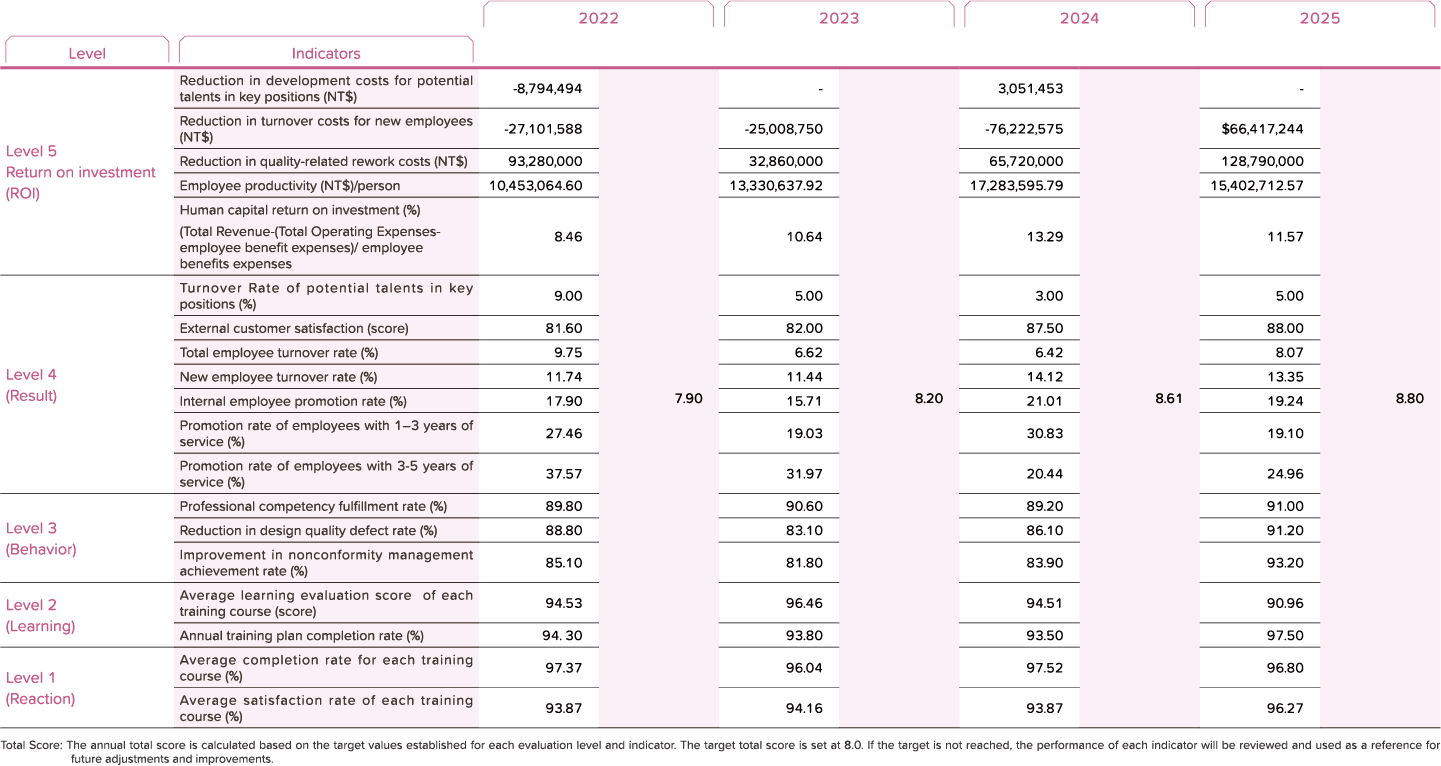
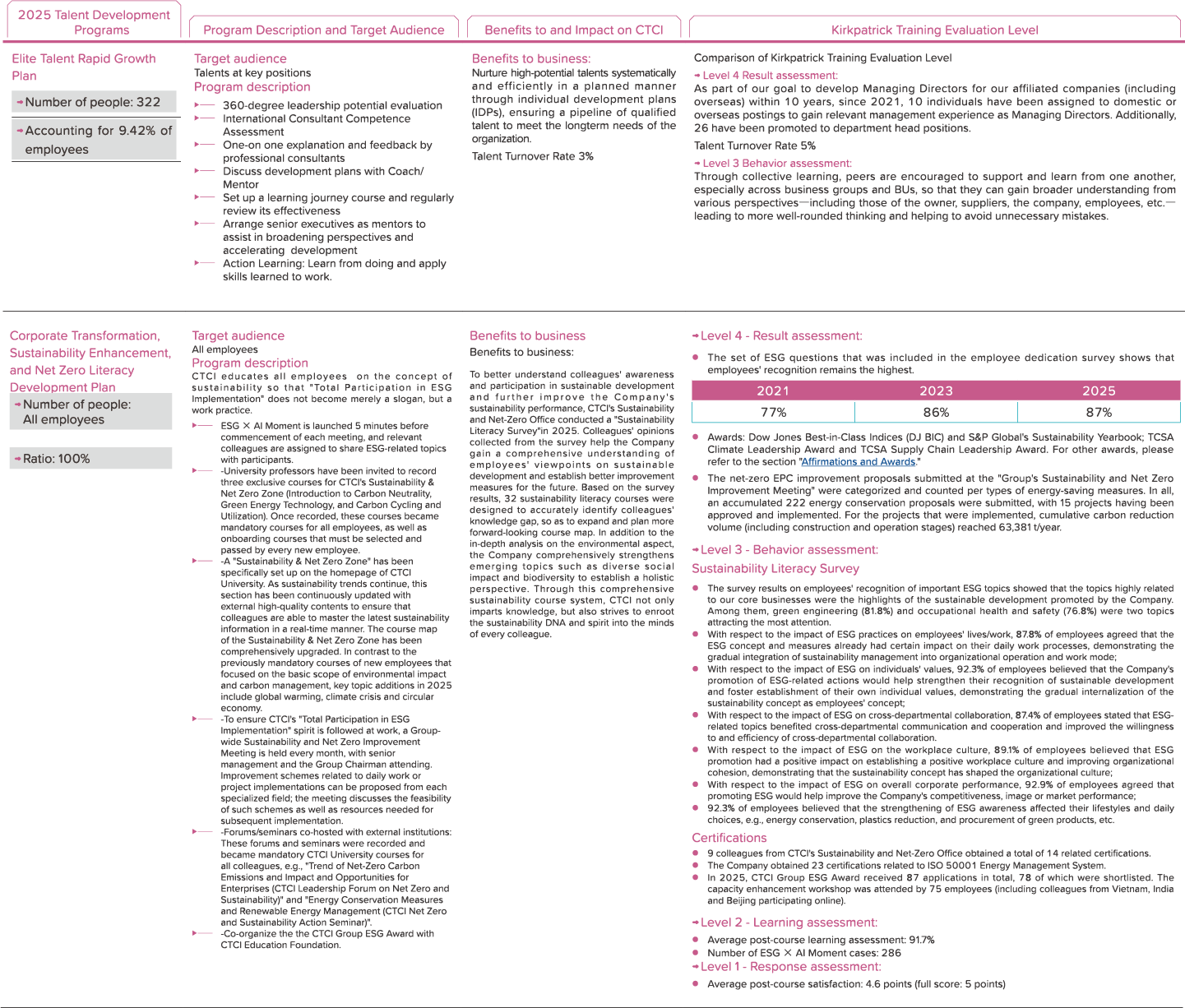
To effectively evaluate training outcomes, we apply Kirkpatrick's Four-Level Training Evaluation Model, linking the results to business performance to assess the return on investment (ROI) of post-training efforts.
The training effectiveness evaluation at each level is as follows:

Talent Development Plan
Based on the needs for achieving the operational goals and employee career development, CTCI introduced the following employee development plans to ensure the organization remains competitive in a constantly evolving market and business environment, while addressing the shared needs of both the company and its employees ― ultimately enabling the delivery of more professional services to clients.
CTCI University
The "CTCI University" online learning platform was officially launched in 2020. It is based on organizational development needs and competency structure, featuring six colleges and
23 departments to construct a systematic talent cultivation system. By the end of December 2025, the platform has included nearly 1,400 courses for employees to choose from every September. Employees can flexibly take courses according to their position requirements and career development to enhance professional abilities and interdisciplinary learning, supporting continuous organizational development and talent upgrading.
1. College of Professional Education | Course Optimization Plan
For courses to become more professional, a course optimization plan was initiated in April 2025, starting with an in-depth review of the learning appropriateness of all professional course contents. Accordingly, courses were added, deleted, consolidated, and revised. The appropriateness of professional courses for various position levels was also reviewed to check their alignment with position requirements, connection between hierarchical levels, and interdisciplinary learning needs. At the same time, the learning progression for job positions was divided into various levels, distinguishing Entry and Advanced job position courses to enhance the clarity of the course structure and facilitate employees' course selection.
2. College of Leadership | Strengthening Executives' Forward-Looking Industry Insights
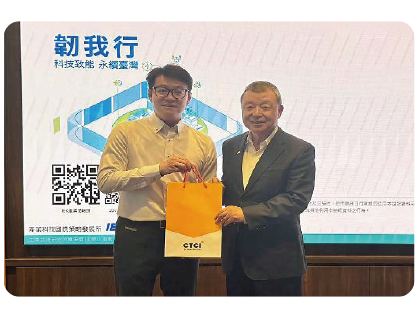
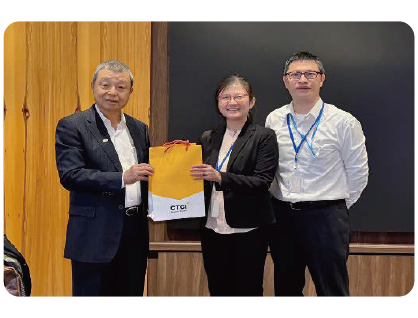
CTCI developed a three-stage executive training program within the College of Leadership, planning exclusive courses at each managerial level to cultivate essential management competencies, such as workplace communication, team building, and leadership. Additionally, CTCI University holds quarterly "Advanced Management Courses" lectures, inviting speakers from the industry, government, and academia to share industry development trends and technological insights, enhancing executives' market insight. In 2025, four specialized lectures were held: "Review of the Petrochemical Industry and Development Trends in a Changing Supply Chain Landscape," "Geothermal and Carbon Sequestration Technologies and Industries:Trends and Opportunities," "Current Developments in International Carbon Credits and Trading Mechanisms," and "Challenges and Business Opportunities of Smart Grids." These lectures equipped executives with better skills and knowledge to lead their teams, thereby improving overall team performance.
3. College of General Education | Comprehensive Upgrade of the Sustainability and Net Zero Course Map
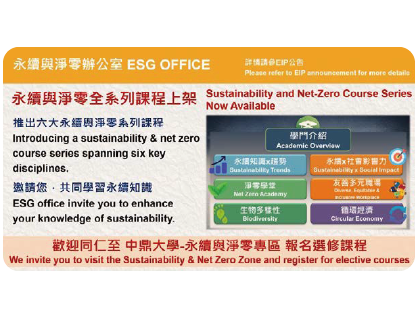
Besides professional and management courses, CTCI University offers general education courses within the College of General Education, under the subsection "Sustainability and Net Zero." Unlike previous mandatory onboarding courses for new employees focusing on basic environmental impact domains, key topics beyond carbon management―such as global warming, climate crisis, and circular economy―were added in 2025.

In addition, the CTCI ESG Office planned a full series of 32 sustainability and net zero courses based on the results of the "Sustainability Literacy Survey," accurately identifying employees' knowledge gaps for expanding and planning a more forward-looking course map. The courses cover six major domains: Sustainability Trends, Circular Economy, Net Zero Academy, Diverse, Equitable & Inclusive Workplace, Biodiversity, and Sustainability Social Impact. Besides deeply rooting in environmental aspects, the program fully strengthens emerging issues such as diverse social influence and biodiversity to build a broad perspective.

To further enhance company-wide sustainability consensus and foundational abilities, two mandatory courses for all employees have been planned in 2026, which are "Sustainability Trends: ESG Overview" and "Net Zero Academy: Why Do Companies Need 'Carbon Management'? Understanding Global Warming and the Climate Crisis," so as to build important learning foundations for promoting organizational sustainable development.
Through this comprehensive system of sustainability courses, CTCI imparts knowledge and strengthens the sustainability spirit deeply in the minds of every employee.
4. CTCI Learning | Expanding Shared Engineering Knowledge, Implementing Social Responsibility and Professional Heritage
CTCI established the "CTCI Learning" online learning platform in 2021. This platform is dedicated to transforming the group's 40 years of practical experience into open knowledge assets by providing more than 258 free courses in the engineering field for the industry, government, and academia. As of the end of 2025, the platform's total accumulated views have exceeded 30,800, demonstrating the far-reaching impact of knowledge sharing. In 2025, CTCI Learning increased its professional breadth by adding six selected courses covering topics such as intelligent building air conditioning, as well as HSE safety analysis. The video recordings of the "5th Taiwan Sustainable Engineering Forum 2025," hosted by CTCI, was also included to allow the public to understand more about the annual sustainable engineering event.

Looking ahead, CTCI will continue to spearhead talent cultivation and transformation in 2026, with plans to expand two major programs―"Project Procurement Engineer" and "Fabrication Engineer." Through the transfer of more systematic practical knowledge, CTCI fulfills corporate social responsibility, contributes to the sustainable development, and helps improve the competitiveness of Taiwan's engineering industry.